
The goal is to record most books written or edited by Western Michigan University faculty, staff and students. There is a WMU Authors section in Waldo Library, where most of these books can be found. With a few exceptions, we do not have the rights to put the full text of the book online, so there will be a link to a place where you can purchase the book or find it in a library near you.




-
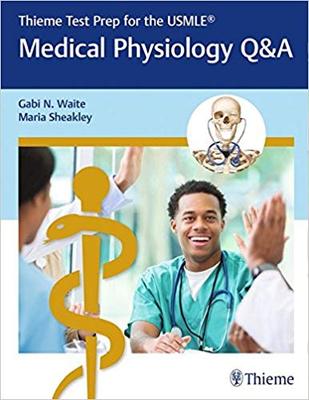
Medical Physiology Q&A
Gabi N. Waite and Maria Sheakley
Thieme Test Prep for the USMLE®: Medical Physiology is the choice of medical students... ...The major test-prep resources do not focus on these subjects in detail. A question bank...would be beneficial to those who struggle with these as an additional resource for studying... - Ethan Young (Fourth-year medical student, University of South Dakota, Sanford School of Medicine) ...Very well written in step 1 format, with very good explanations-which is one of the most helpful parts of a prep question set... Succinct but comprehensive in helping me to understand more about each of the other answers listed (and easy for me to see why they are wrong). âe" Chris Moser (Third-year medical student, Alabama College of Osteopathic Medicine) Thieme Test Prep for the USMLE®: Medical Physiology from Gabi Waite and Maria Sheakley transforms high-yield concepts into challenging multiple choice questions organized by body system. Readers will learn how to synthesize, integrate, and apply physiological concepts to clinical situations in a format mirroring the USMLE® exam. Key Highlights More than 750 USMLE®-style multiple choice questions on physiology and pathophysiology, categorized as easy, moderate, and difficult, with detailed explanations Questions begin with a clinical vignette and approximately 20% are image-based, mirroring the USMLE-format. Every question tagged by organ system, difficulty level, disease, and normal, abnormal or therapeutic process, enabling electronic format question sorting This essential resource will help you assess your knowledge and fully prepare for board examinations.
-
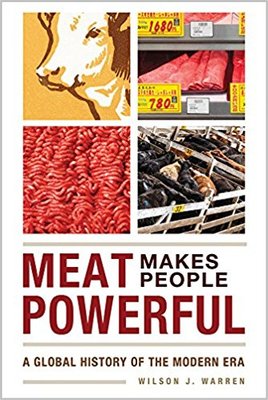
Meat Makes People Powerful: A Global History of the Modern Era
Wilson J. Warren
From large-scale cattle farming to water pollution, meat— more than any other food—has had an enormous impact on our environment. Historically, Americans have been among the most avid meat-eaters in the world, but long before that meat was not even considered a key ingredient in most civilizations’ diets. Labor historian Wilson Warren, who has studied the meat industry for more than a decade, provides this global history of meat to help us understand how it entered the daily diet, and at what costs and benefits to society.
Spanning from the nineteenth century to current and future trends, Warren walks us through the economic theory of food, the discovery of protein, the Japanese eugenics debate around meat, and the environmental impact of livestock, among other topics. Through his comprehensive, multifaceted research, he provides readers with the political, economic, social, and cultural factors behind meat consumption over the last two centuries. With a special focus on East Asia, Meat Makes People Powerful reveals how national governments regulated and oversaw meat production, helping transform virtually vegetarian cultures into major meat consumers at record speed.
As more and more Americans pay attention to the sources of the meat they consume, Warren’s compelling study will help them not only better understand the industry, but also make more informed personal choices. Providing an international perspective that will appeal to scholars and nutritionists alike, this timely examination will forever change the way you see the food on your plate.
-
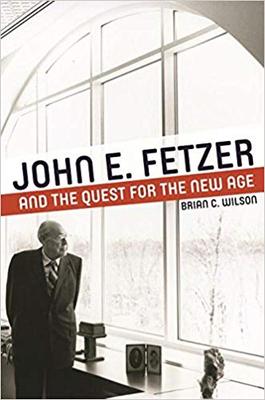
John E. Fetzer and the Quest for the New Age
Brian C. Wilson
John E. Fetzer and the Quest for the New Age follows the spiritual sojourn of John E. Fetzer, a Michigan business tycoon. Born in 1901 and living most of his life in Kalamazoo, Fetzer parlayed his first radio station into extensive holdings in broadcasting and other enterprises, leading to his sole ownership of the Detroit Tigers in 1961. By the time he died in 1991, Fetzer had been listed in Forbes magazine as one of the four hundred wealthiest people in America. And yet, business success was never enough for Fetzer-his deep spiritual yearnings led him from the Christianity of his youth to a restless exploration of metaphysical religions and movements ranging from Spiritualism, Theosophy, Freemasonry, UFOology, and parapsychology, all the way to the New Age as it blossomed in the 1980s.