
The goal is to record most books written or edited by Western Michigan University faculty, staff and students. There is a WMU Authors section in Waldo Library, where most of these books can be found. With a few exceptions, we do not have the rights to put the full text of the book online, so there will be a link to a place where you can purchase the book or find it in a library near you.





-
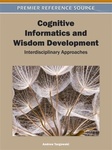
Cognitive Informatics and Wisdom Development : Interdisciplinary Approaches
Andrew S. Targowski
Since wisdom is the ultimate human virtue, its application is important for humans and civilization. Cognitive Informatics and Wisdom Development: Interdisciplinary Approaches argues that wise civilization cannot function without wise people and vice versa, that wise people cannot function without positive conditions for the development of wise civilization. Using the cognitive informatics approach as a basis for the investigation of wisdom, this book offers solutions on how to study and evaluate the state of wisdom in 21st century society and the requirements for wise civilization and its monitoring systems.
-
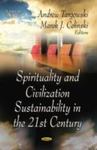
Spirituality and Civilization Sustainability in the 21st Century
Andrew S. Targowski and Marek J. Celinski
This book investigates the state of civilization in the 21st century, which is characterized by the transformation of Western Civilization into Global Civilization and the resulting Great Recession, triggered by the financial crisis in the United States in 2008. Since the state of former Western Civilization is steadily worsening, the question is rising whether civilization is sustainable at all. To answer this question, 20 authors, members of the International Society for the Comparative Study of Civilizations (from several countries and continents) investigate the aspect of human spirituality, and whether its actual level of development is able to steer the sustainable development of civilization? The authors investigate the complexity of the current state of world civilization and the Planet, concluding that western societies entered the Second Great Crisis of Civilization, and reminding that the First Great Crisis took place after the fall of Rome I in 476 CE, and lasted till the Italian Renaissance, which means almost 1000 years. This book offers spirituality 2.0 as a possible tool for people to behave wisely in order to sustain our civilization. This new spirituality 2.0 contains a set of complementary best values of current eight civilizations, which should lead to tolerant (less-conflict driven) human behavior and wise decision-making. The book finally defines Wise Civilization and paths of its implementation, under the condition that people will be not only knowledgeable, but wise and inspired mainly by right spirituality.
-
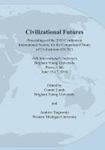
Civilizational Futures: Proceedings of the 40th International Conference of the International Society for the Comparative Study of Civilizations (ISCSC)
Andrew S. Targowski and Connie Lamb
Civilizational Futures2010 International Society for the Comparative Studyof Civilizations (ISCSC) 40th International ConferenceBrigham Young University Provo, UtahJune 15-17, 2010 Edited byConnie Lamb (Brigham Young University) Andrew Targowski (Western Michigan University) Program Committee Michael Andregg - Chairperson Ricardo Duchesne, Laina Farhat-Holzman, Hue-Ying Kuo, Connie Lamb Anthony Stevens-Arroyo, Andrew Targowski, David Wilkinson
-
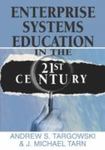
Enterprise Systems Education in the 21st Century
Andrew S. Targowski and J. Michael Tarn
IT education, particularly at business colleges, is undergoing a transformation because of the emerging federated systems or enterprise-wide systems (ES). This follows a trend in industry, which uses complex software applications like SAP and others. This movement toward ES in industry has created major challenges for integrating ES into the classroom.Enterprise Systems Education in the 21st Century presents methods of reengineering business curricula in order to use ES solutions. It also helps ES vendors understand the higher education environment so they can support college and university programs. Enterprise Systems Education in the 21st Century acts as a platform for both educators and vendors to present solutions and experiences gained from the challenges of integrating ES into the business classroom.
-
Managing Organizational Behavior
Henry L. Tosi, John Rizzo, and Neal P. Mero
Managing Organizational Behavior, Fourth Edition,bridges cutting-edge theory with modern leadership and managerial practices. This proven textbook leads advanced undergraduates and MBAs through a discussion of individual behavior influences to a consideration of the social influences the individual encounters upon contact with groups and organizations.
- Bridges cutting-edge theory with modern leadership and managerial practices.
- Contains new material on diversity, international OB, and ethics.
- Applies theory and research with new and superior pedagogy.
- Provides strong teaching resources within an Instructor's Manual and Test Bank.
-
Concepts in Enterprise Resource Planning
Bret Wagner
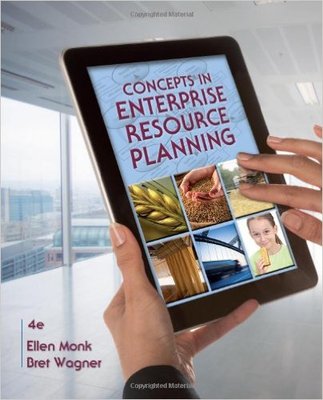
Learn how to master and maximize enterprise resource planning (ERP) software -- which continues to grow in importance in business today -- with Monk/Wagner's CONCEPTS IN ENTERPRISE RESOURCE PLANNING, 4E. Readers discover how to use ERP tools to increase growth and productivity while reviewing how to effectively combine an organization's numerous functions into one comprehensive, integrated system. CONCEPTS IN ENTERPRISE RESOURCE PLANNING, 4E reflects the latest trends and updates in ERP software as well as introduces the basic functional areas of business and their relationships. Readers see how see how integrated information systems help organizations improve business process and provide managers with accurate, consistent, and current data for making informed strategic decisions.
-
Make Yourself a Millionaire: How to Sleep Well and Stay Sane on the Road to Wealth
Charles C. Zhang and Lynn L. Chen-Zhang
Easy to follow personal finance guidelines from American Express's #1 rated financial advisor.