Our goal is to eventually record most books written or edited by Western Michigan University faculty, staff and students. If you are a WMU faculty or staff member and have a book you would like to include in this list, please contact wmu-scholarworks@wmich.edu

























































































































-
Hollywood and the Rise of Physical Culture
Heather Addison
This study examines the relationship between cinema and physical culture (i.e. activities such as dieting and muscle-building). Hollywood's long-standing prominence on the world state makes it an ideal place to begin such an examination. The evidence that emerges from a case study of Hollywood's impact on the American reducing craze of the 1920s, a physical culture fad whose chief focus was on shedding fat, will form the basis for speculation regarding the interrelationship of Hollywood and physical culture.
-
Muslim Women and Politics of Participation
Mahnaz Afkhami and Erika Friedl
This volume is about the ways of promoting women's participation in the affairs of Muslim societies: from raising consciousness and changing codes of law, to penetrating the economic markets and influencing national and international policies.
-
"But Will It Work With Real Students?": Scenarios for Teaching Secondary English Language Arts
Janet Alsup and Jonathan Bush
Pedagogical narratives written by secondary teachers and thoughtful responses to these narratives by experienced teachers and teacher educators form the heart of this text. Alsup and Bush also include concise summaries of related theory and research and controversies in the field, through annotated bibliographies for continued reading, discussion questions, and suggested learning activities for preservice teachers. Beginning with narratives about teaching literature, writing, language/grammar, second language learners in the English classroom, management, discipline, technology, and standardized testing, the authors contextualize these stories within the larger discipline of secondary English language arts teaching and provide a framework for teacher professional identity development by prompting continued thinking about curricular choices, teaching philosophies, and personal pedagogies. Alsup and Bush include a final chapter describing how a secondary English teacher can use narrative action research in his or her class to become a critically reflective practitioner.
-
Directory of programs in physical education teacher education
Susan F. Ayers, Lynn Dale Housner, and Ha Young Kim
With a listing of over 100 schools, this is a compendium of academic undergraduate physical education teacher education programs in the United States. It presents contact information, admission requirements, NCATE/NASPE accreditation, degrees offered, credit hours, additional licensures, and certifications and second teaching fields.
-
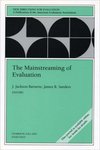
The Mainstreaming of Evaluation: New Directions for Evaluation
J. Jackson Barnette and James R. Sanders
1. Mainstreaming Evaluation (James R. Sanders) The concept of mainstreaming evaluation is defined, and the question of why mainstreaming is not more prevalent is addressed.
2. Mainstreaming Evaluation or Building Evaluation Capability? (Three Key Elements Paul Duignan) An overview of three approaches to mainstreaming evaluation that have been used in New Zealand, particularly in human services programs that serve both European and Maori populations, is presented.
3. The Rigidity and Comfort of Habits: A Cultural and Philosophical Analysis of the Ups and Downs of Mainstreaming Evaluation (Nancy Grudens-Schuck) This chapter describes frameworks for understanding the meanings of evaluation mainstreaming based on anthropological research in Indonesia.
4. PIE à la Mode: Mainstreaming Evaluation and Accountability in Each Program in Every County of a Statewide School Readiness Initiative (Abraham Wandersman, Paul Flaspohler, April Ace, Laurie Ford, Pamela S. Imm, Matthew J. Chinman, Jeffrey Sheldon, Arlene Bowers Andrews, Cindy A. Crusto, Joy S. Kaufman) This chapter describes the framework and implementation of a program accountability system in a statewide initiative that was developed to enable practitioners to provide evaluation information required by legislative mandate and to develop the capacity of practitioners to systematically plan their program, implement with quality, and self-evaluate.
5. Helping Evaluators Swim with the Current: Training Evaluators to Support Mainstreaming (J. Jackson Barnette, Anne Baber Wallis) This chapter proposes approaches to evaluation training that aim to seed the field with practitioners who are able work with organizations in an overtly participatory manner.
6. Issues and Practices Related to Mainstreaming Evaluation: Where Do We Flow from Here? (David D. Williams, Mark L. Hawkes) This chapter summarizes Presidential Strand and other selected sessions from the 2001 annual meeting of the American Evaluation Association.
-
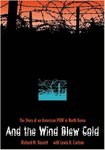
And the Wind Blew Cold: The Story of an American Pow in North Korea
Richard M. Bassett and Lewis H. Carlson
When Richard Bassett returned from Korea on convalescent leave in 1953, he set down his experiences in training, combat, and captivity. More than 20 years later, hospitalized for acute Post Traumatic Stress Disorder, he once again faced his personal demons. This work expands the memoir to include his post-war struggles with the US government and his own wounded psyche. He describes the shock of capture and ensuing long march to Pyokdong, North Korea, Camp 5 on the Yellow River, where many prisoners died of untreated wounds, disease, hunger, paralyzing cold, and brutal mistreatment in the bitter winter of 1950-51. He recounts Chinese attempts to mentally break down prisoners in order to exploit them for propaganda. He then takes the reader through typical days in a prisoner's life, discussing food, clothing, shelter, and work; the struggle against unremitting boredom; religious, social, and recreational diversions; and even those moments of terror when all seemed lost. It refutes Cold War-era propaganda that often unfairly characterized POWs as brainwashed victims or even traitors who lacked the grit that Americans expected of their brave sons.
-

Two Suns in the Sky
Miriam Bat-Ami
During World War II, a 15-year-old girl meets a young Jewish refugee in a New York shelter and soon learns the history behind her city through interaction with her new friend, as well as the barriers that exist when different cultures unite. Winner of the Scott O'Dell Award for Historical Fiction.
-
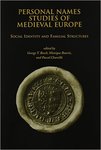
Personal Names Studies of Medieval Europe: Social Identity and Familial Structures
George T. Beech, Monique Bourin, and Pascal Chareille
This collection of essays was the first published in North America that sought to describe the methodology and some results of a scholarly enterprise hailed in the preface to the volume as one of the most vibrant, innovative, and productive movements in medieval scholarship at the present time. Under the direction of Monique Bourin an international team of scholars has been considering onomastics from the perspective of history rather than that of linguistics or philology. By examining data on both the micro and macro levels, researchers are beginning to describe how medieval patterns of naming have implications for our understanding of family relationships, kinship, and larger social structures that were not fully realized by earlier scholars.
-
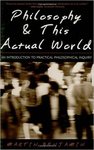
Philosophy & This Actual World: An Introduction to Practical Philosophical Inquiry
Martin Benjamin
Academic philosophy has become so technical and inbred that it often fails to connect with the questions and concerns of educated nonspecialists. Martin Benjamin aims to bridge this gap. Presupposing little or no formal background,Philosophy & This Actual World addresses general questions of knowledge, reality, mind, will, and ethics, as well as more specific questions about moral pluralism, assisted suicide, the nature of death, and life's meaning. At the same time, it incorporates the advances of academic philosophers like Wittgenstein, Rorty, Putnam, and Rawls, making it equally as valuable to the scholar as to the philosophically uninitiated.
-
Philosophy & This Actual World: An Introduction to Practical Philosophical Inquiry by Benjamin
Martin Benjamin
Academic philosophy has become so technical and inbred that it often fails to connect with the questions and concerns of educated nonspecialists. Martin Benjamin aims to bridge this gap. Presupposing little or no formal background,Philosophy & This Actual World addresses general questions of knowledge, reality, mind, will, and ethics, as well as more specific questions about moral pluralism, assisted suicide, the nature of death, and life's meaning. At the same time, it incorporates the advances of academic philosophers like Wittgenstein, Rorty, Putnam, and Rawls, making it equally as valuable to the scholar as to the philosophically uninitiated.
-
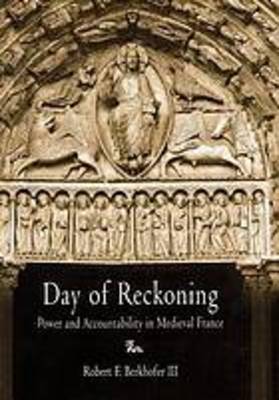
Day of Reckoning: Power and Accountability in Medieval France
Robert Berkhofer
Day of Reckoning: Power and Accountability in Medieval France applies recent approaches to literacy, legal studies, memory, ritual, and the manorial economy to reexamine the transformation of medieval power. Highlighting the relationship of archives and power, it draws on the rich documentary sources of five of the largest Benedictine monasteries in northern France and Flanders, with comparisons to others, over a period of nearly four centuries.
The book opens up new perspectives on important problems of power, in particular the idea and practice of accountability. In a violent society, medieval lords tried to delegate power rather than share it--to get their men to prosecute justice or raise money legitimately, rather than through extortion and pillage. Robert F. Berkhofer III explains how subordinates were held accountable by abbots administering the extensive holdings of Saint-Bertin, Saint-Denis, Saint-Germain-des-Prés, Saint-Père-de-Chartres, and Saint-Vaast-d'Arras. As the abbots began to discipline their agents and monitor their conduct, the "day of reckoning" took on new meaning, as customary meeting days were used to hold agents accountable. By 1200, written and unwritten techniques of rule developed in the monasteries had moved into the secular world; in these practices lay the origins of administration, bureaucratic power, and governance, all hallmarks of the modern state.
-
Here I stand : a musical history of African Americans in Battle Creek, Michigan
Sonya Bernard-Hollins and Sean Hollins
-
Abbo of Fleury, Abbo of Saint-Germain-Des-Pres, and Acta Sanctorum
Frederick M. Biggs, Thomas D. Hill, Paul E. Szarmach, E. Gordon Whatley, and Deborah A. Oosterhouse
-
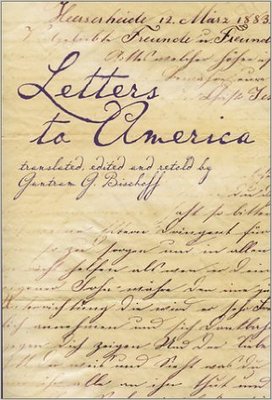
Letters to America
Guntram Bischoff
Published here without alteration, Letters to America: Translated, Edited, and Retold is a manuscript finished by Guntram G. Bischoff shortly before his death in 1988. The work consists of two separate parts. In the first part, Bischoff translated and edited eighty-four letters written between 1882 and 1904 to Heinrich Arndsmann of Quincy, Illinois, by the parents, brother, and sister whom the young German immigrant had left behind. In the second part, Bischoff sought to recreate, through a commentary on these letters, the mental world of a young Heinrich Arndsmann as he endeavored to maintain familial ties across the broad expanse of the Atlantic Ocean.
-

Heimat (Studies in German Literature Linguistics and Culture)
Peter Blickle
The idea of Heimat (home, homeland, native region) has been as important to German self-perceptions over the last two hundred years as the shifting notion of the German nation. While the idea of Heimat has been long neglected in English studies of German culture--among other reasons because the word Heimat has no exact equivalent in English--this book offers us the first cross-disciplinary and comprehensive analysis, in English or German, of this all-pervasive German idea. Blickle shows how the idea of Heimat interpenetrates German notions of modernity, identity, gender, nature, and innocence. Blickle reminds us of such commonplace expressions of Heimat sentimentality as Biedermeier landscapes of Alpine meadows and castles on the Rhine, but also finds the Heimat preoccupation in Hegel, Nietzsche, and Freud. Always aware of the many literary representations of Heimat (for instance in Schiller, Hölderlin, Heine, Kafka, and Thomas Mann), Blickle does not argue for the fundamental innocence of Heimat. Instead he shows again and again how the idealization of a home ground leads to borders of exclusion.
-

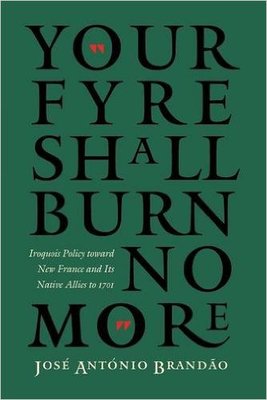
Your Fyre Shall Burn No More
Jose Antonio Brandao
Why were the Iroquois unrelentingly hostile toward the French colonists and their Native allies? The longstanding "Beaver War" interpretation of seventeenth-century Iroquois-French hostilities holds that the Iroquois’ motives were primarily economic, aimed at controlling the profitable fur trade. José António Brandão argues persuasively against this view. Drawing from the original French and English sources, Brandão has compiled a vast array of quantitative data about Iroquois raids and mortality rates. He offers a penetrating examination of seventeenth-century Iroquoian attitudes toward foreign policy and warfare, contending that the Iroquois fought New France not primarily to secure their position in a new market economy but for reasons that traditionally fueled Native warfare: to replenish their populations, safeguard hunting territories, protect their homes, gain honor, and seek revenge.
-
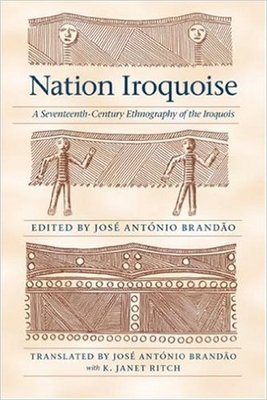
Nation Iroquoise: A Seventeenth-Century Ethnography of the Iroquois
José António Brandão
Nation Iroquoise presents an intriguing mystery. Found in the Bibliotheque Mazarine in Paris and in the National Archives of Canada in Ottawa, the unsigned and undated manuscript Nation Iroquoise is an absorbing and informative eyewitness account of the daily life and societal structure of the Oneida Iroquois in the seventeenth century. The Nation Iroquoise manuscript is arguably one of the earliest known comprehensive descriptions of an Iroquois group. Rich in ethnographic detail, the work is replete with valuable information about the traditional Oneidas: the role of women in tribal councils; mortuary customs; religious beliefs and rituals; warfare; the function of the clan system in tribal governance; the impact of alcohol; and the topography, flora, and fauna of the Oneida territory. It also offers important information about the famed Iroquois Confederacy during the 1600s. Drawing on multiple strands of evidence and following a trail of clues within the Nation Iroquoise manuscript and elsewhere, José António Brandão presents the results of a fascinating and convincing piece of detective work. He explains who might have written the manuscript as well as its contribution to our understanding of the Iroquois and their culture. The book includes the original French transcription and its English translation. Brandão also provides an illuminating overview of Iroquois culture and of Iroquois-French relations during the period in which the Nation Iroquoise manuscript was likely written.
-
On the Future of History: The Postmodernist Challenge and Its Aftermath
Ernst Breisach
What does postmodernism mean for the future of history? Can one still write history in postmodernity? To answer questions such as these, Ernst Breisach provides the first comprehensive overview of postmodernism and its complex relationship to history and historiography. Placing postmodern theories in their intellectual and historical contexts, he shows how they are part of broad developments in Western culture. Breisach sees postmodernism as neither just a fad nor a universal remedy. In clear and concise language, he presents and critically evaluates the major views on history held by influential postmodernists, such as Derrida, Foucault, Lyotard, and the new narrativists. Along the way, he introduces to the reader major debates among historians over postmodern theories of evidence, objectivity, meaning and order, truth, and the usefulness of history. He also discusses new types of history that have emerged as a consequence of postmodernism, including cultural history, microhistory, and new historicism. For anyone concerned with the postmodern challenge to history, both advocates and critics alike, On the Future of History will be a welcome guide.
-
Performance-Based Instruction
Dale Brethower and Karolyn Smalley
Do you need some performance magic NOW? You see the performance and productivity expectations. Now you need a little magic to make them happen. The magic is here! With this book as your guide, you'll pinpoint the goal, you'll find the gap between that goal and where you are now, and then you'll close the gap. Simple, quick, inexpensive, and effective--that's what Performance-Based Instruction is about! using these brilliant designs, you will clarify job expectations and foster pride and confidence in employees' work performance.
When performance improvement is vitally needed? The concerned practitioner would do well to heed Smalley and Brethower's thoughtful advice.
The User's Manual appAndix gives you specific pointers on using this book as a guide in an HRD department, as a text in an academic setting, or as a professional development tool for solo practitioners. The enclosed Microsoft Word diskette gives you an electronic, customizable source of quick-implementation job aids. It's all here. Grab this book of spells, add a dash of attentive work, and create some performance magic today!
-
Conservancy: The Land Trust Movement in America
Richard Brewer
Land trusts, or conservancies, protect land by owning it. Although many people are aware of a few large land trusts—The Nature Conservancy and the Trust for Public Land, for instance—there are now close to 1,300 local trusts, with more coming into being each month. American land trusts are diverse, shaped by their missions and adapted to their local environments. Nonetheless, all land trusts are private, non-profit organizations for which the acquisition and protection of land by direct action is the primary or sole mission. Nonconfrontational and apolitical, land trusts work with willing land owners in voluntary transactions. Although land trusts are the fastest-growing and most vital part of the land conservation movement today, this model of saving land by private action has become dominant only in the past two decades. Brewer tells why the advocacy model—in which private groups try to protect land by promoting government purchase or regulation— in the 1980s was eclipsed by the burgeoning land trust movement. He gives the public a much-needed primer on what land trusts are, what they do, how they are related to one another and to other elements of the conservation and environmental movements, and their importance to conservation in the coming decades. As Brewer points out, unlike other land-saving measures, land trust accomplishments are permanent. At the end of a cooperative process between a landowner and the local land trust, the land is saved in perpetuity. Brewer’s book, the first comprehensive treatment of land trusts, combines a historical overview of the movement with more specific information on the different kinds of land trusts that exist and the problems they face. The volume also offers a "how-to" approach for persons and institutions interested in donating, selling, or buying land, discusses four major national land trusts (The Nature Conservancy, Trust for Public Land, American Farmland Trust, and Rails-to-Trails Conservancy); and gives a generous sampling of information about the activities and accomplishments of smaller, local trusts nationwide. Throughout, the book is enriched by historical narrative, analysis of successful land trusts, and information on the how and why of protecting land, as well as Brewer’s intimate knowledge of ecological systems, biodiversity, and the interconnectedness of human and non-human life forms. Conservancy is a must-read volume for people interested in land conservation—including land trust members, volunteers and supporters—as well as anyone concerned about land use and the environment.
-
The Success Case Method: Find Out Quickly What's Working and What's Not
Robert O. Brinkerhoff
The Success Case Method (SCM) offers a simple, carefully crafted way of determining how well a new organizational initiative is working. Already shown to be effective in dozens of organizations, SCM is based on five steps: focusing and planning the study; clearly defining what outcomes will be considered ""success""; identifying success cases; conducting interviews to learn exactly how success was achieved; and communicating results throughout the organization.
-
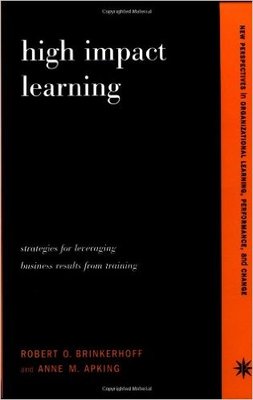
High Impact Learning: Strategies For Leveraging Performance And Business Results From Training Investments
Robert O. Brinkerhoff and Anne M. Apking
Every organization seeks to provide its employees with learning and development opportunities that are both targeted to their individual needs and produce measurable and worthwhile business results. In High Impact Learning, Brinkerhoff and Apking outline a comprehensive, proven, and practical approach for bridging the gap between employee and organizational goals and launching training initiatives of visible and lasting impact.
-
"Face Zion Forward": First Writers of the Black Atlantic
Joanna Brooks and John Saillant
At the close of the Revolutionary War, more than 3,000 black Loyalists, many liberated from slavery by enlisting in the British army, made exodus in 1783 from New York to Nova Scotia in search of land and freedom. Almost half of the emigrants settled an independent black community at Birchtown, Nova Scotia, where, despite extraordinarily harsh conditions, they established their own churches and schools, and cultivated a shared sense of themselves as a chosen people. A majority of the population emigrated once again in 1791, this time setting sail for Sierra Leone to fulfill what they perceived to be their prophetic destiny. This circuit of gathering, exodus, and diaspora was grounded in a unique black Atlantic theology focused on redemption and Zion that was conceptualized and shaped by the charismatic black evangelists of diverse Protestant faiths who converged in the Nova Scotia settlements. "Face Zion Forward" now brings together the remarkable writings of these early authors of the black Atlantic. This collection of memoirs, sermons, and speeches, many of which are based on the Birchtown experience, documents how John Marrant, David George, Boston King, and Prince Hall envisioned the role of Africa and African American communities in black liberation. The volume demonstrates that these men were both collaborators and contestants in the construction of modern post-slavery black identities, and shows how the frameworks of Christian theology and Freemasonry influenced ideas about emancipation and communal independence. The centerpiece of the work is The Journal of John Murrant, published here in its entirety for the first time since 1790. Marrant's missionary diary not only illuminates the intricacies of eighteenth-century African American Christianity, but also presents a richly detailed account of everyday life in Birchtown. "Face Zion Forward" provides an informed reconstruction of the major ideological and theological conversations that occurred among North American blacks after the American Revolution and illustrates the disparate and complex underpinnings of the modern black Atlantic. In addition, the work presents invaluable insights into African American literary traditions and the development of Ethiopianist and black nationalist discourses.
-
"Face Zion Forward": First Writers of the Black Atlantic, 1785-1798
Joanna Brooks, John Saillant, and Richard Yarborough
At the close of the Revolutionary War, more than 3,000 black Loyalists, many liberated from slavery by enlisting in the British army, made exodus in 1783 from New York to Nova Scotia in search of land and freedom. Almost half of the emigrants settled an independent black community at Birchtown, Nova Scotia, where, despite extraordinarily harsh conditions, they established their own churches and schools, and cultivated a shared sense of themselves as a chosen people. A majority of the population emigrated once again in 1791, this time setting sail for Sierra Leone to fulfill what they perceived to be their prophetic destiny. This circuit of gathering, exodus, and diaspora was grounded in a unique black Atlantic theology focused on redemption and Zion that was conceptualized and shaped by the charismatic black evangelists of diverse Protestant faiths who converged in the Nova Scotia settlements. "Face Zion Forward" now brings together the remarkable writings of these early authors of the black Atlantic. This collection of memoirs, sermons, and speeches, many of which are based on the Birchtown experience, documents how John Marrant, David George, Boston King, and Prince Hall envisioned the role of Africa and African American communities in black liberation. The volume demonstrates that these men were both collaborators and contestants in the construction of modern post-slavery black identities, and shows how the frameworks of Christian theology and Freemasonry influenced ideas about emancipation and communal independence. The centerpiece of the work is The Journal of John Murrant, published here in its entirety for the first time since 1790. Marrant's missionary diary not only illuminates the intricacies of eighteenth-century African American Christianity, but also presents a richly detailed account of everyday life in Birchtown. "Face Zion Forward" provides an informed reconstruction of the major ideological and theological conversations that occurred among North American blacks after the American Revolution and illustrates the disparate and complex underpinnings of the modern black Atlantic. In addition, the work presents invaluable insights into African American literary traditions and the development of Ethiopianist and black nationalist discourses.