

The goal is to record most books written or edited by Western Michigan University faculty, staff and students. There is a WMU Authors section in Waldo Library, where most of these books can be found. With a few exceptions, we do not have the rights to put the full text of the book online, so there will be a link to a place where you can purchase the book or find it in a library near you.
























































-
Fiber Face: Cross-Cultural Batik Collaborations, Indonesia 2008
Agus Ismoyo, Nia Fliam, and Mary-Louise Totton
"In essence our world cultures are one and have arisen from the strength of the mind and the spirit of humankind and are based on the philosophies and cosmologies that are their roots. Ancient traditional cultures give evidence of this process and are roadmaps for the future." —Nia Fliam and Agus Ismoyo Isnugroho This team of artists has been working across visible and invisible boundaries since 1985 when they established their fine-art batik studio, Brahma Tirta Sari, in Yogyakarta, Java, Indonesia. Nia, an American educated at Pratt Institute of New York, and Ismoyo, educated in an Indonesian industrial academy, translate the name of their studio to mean "creativity as the source of all knowledge."[1] In 2005 they created a "culture house," Babaran Segaragunung, to support their exploration of traditional cultures. We are very proud to have Nia and Ismoyo as artists-in-residence at Western Michigan University during the 2007-2008 school year—funded by the Fulbright Scholar-in-Residence program, the Haenicke Institute for Global Education, and the Frostic School of Art. Nia and Ismoyo are both artists and cultural explorers. Their art expresses their deep understanding of traditional Indonesian batik—once a royal art form intertwined with ancient philosophies about life and creative process. Their contemporary fine art textiles are intricate and time intensive. They have exhibited in many prestigious exhibitions around the world, and worked with many distinguished curators. Since 1994 they have researched, taught, and worked in collaboration with Australian Aboriginals, Native Americans, Indonesian street youths, and various African, Asian and Australian artists.
[1] Brahma, is the Hindu world creator deity and as the chief priest is the best source of knowledge, Tirta is the name of a sacred water source, and Sari, translates as essence.
*from WMU Frostic School of Art website.
-
Building Reading Confidence In Adolescents: Key Elements That Enhance Proficiency
Holly Johnson, Lauren Freedman, and Karen F. Thomas
The authors present a research-based approach for building reading self-efficacy and focus on four concepts necessary to learners' literacy success: confidence, independence, metacognition, and stamina.
-
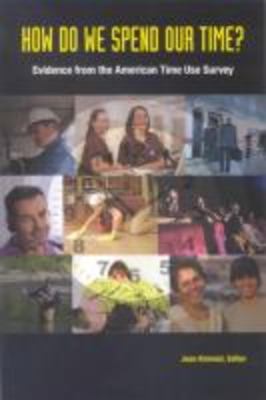
How Do We Spend Our Time?: Evidence from the American Time Use Survey
Jean Kimmel
After years of study the Bureau of Labor Statistics initiated the annual American Time Use Survey in which respondents report how they spend their time, these detailed data open a window on how americans spend their time and afford economists the opportunity to gain a better understanding of everyday life.
-
Principles of Behavior
Richard Malott
This book offers a solid introduction to the principles of behavior using a clear, interesting, entertaining style with many case studies, and everyday examples. It maintains a high level of intellectual rigor, addressing fundamental concepts at the beginning of each chapter with more advanced topics left for one of the two enrichment sections within each chapter. Chapter topics cover the reinforcer, reinforcement, escape, punishment, penalty, extinction and recovery, differential reinforcement and punishment, shaping, unlearned reinforcers and aversive conditions, special establishing operations, learned reinforcers and aversive conditions, discrimination, imitation, avoidance, punishment by prevention, ratio schedules, time-dependent schedules, concurrent contingencies, stimulus-response chains and rate contingencies, respondent conditioning, analogs to reinforcement, a theory of rule-governed behavior, pay for performance, moral and legal control, maintenance, transfer, and research methods. For psychologists, clinical psychologists, and social workers who do not specialize in behavioral analysis; as well as for supervisors and managers.
-

What If Medicine Disappeared?
Gerald E. Markle and Frances B. McCrea
In this thought-provoking book, sociologists Gerald E. Markle and Frances B. McCrea ask what would happen if Western medicine were to disappear. Using a rigorous and imaginative method--a thought experiment--Markle and McCrea evaluate medicine's impact on mortality and our national health. They examine various aspects of medicine, such as primary care, surgery, emergency medicine, pharmaceuticals, and mental illness treatment, and convincingly point out the problems that health care actually causes. Supporting their ideas with statistics and studies from medical and social science literature, Markle and McCrea argue that the medical model, despite its tremendous budget and hype, accomplishes far less than most would think. Their conclusions should promote critical review and lively discussion among medical consumers as well as among health care professionals and policy makers. *from the back cover
-
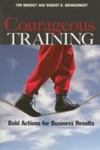
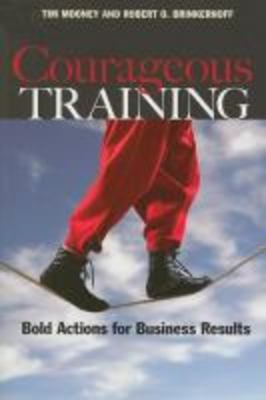
Courageous Training: Bold Actions for Business Results
Tim Mooney and Robert O. Brinkerhoff
For years there have been dozens of books about training and how to do it more effectively, with more impact, with greater focus on performance, and so on, and on. Yet despite the surge of books and advice over the past decade, training departments continue to struggle to produce concrete results, and the value of training is constantly questioned. But some "upstarts" are achieving results in a radical, non-traditional way in small pockets around the world. Based on four years of Advantage Performance Group's groundbreaking work, and featuring numerous real-life stories and several illuminating case studies this book shares the process, the journey, and the professional courage these HRD professionals took to ensure that they were helping their organizations achieve important business results.
-
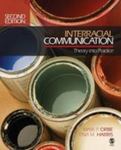
Interracial Communication: Theory Into Practice
Mark P. Orbe and Tina M. Harris
Specifically addressing how interpersonal communication as process is potentially impeded because of how we are socialized to think about racial differences, this exciting and much-anticipated second edition of Interracial Communication: Theory Into Practice guides readers in applying the valuable contributions of recent communication theory to improving everyday communication among the races. Authors Mark P. Orbe and Tina M. Harris offer a comprehensive, practical foundation for dialogue on interracial communication, as well as a resource that stimulates thinking and encourages readers to become active participants in the solution process.
New to the Second Edition"Incorporates new topics: " This edition includes discussions of whiteness and diversity management within the workplace and a brand new chapter on interracial conflict."Provides updated statistics, research studies, and examples: "Changes reflect the state of study in a post-9/11 society, including discussions of how the media frame race in relation to Middle Easterners and Latinos and pending issues relative to illegal immigration."Offers student reflections: " Chapter concepts are brought to life through self-reflections about race as experienced by students enrolled in an interracial communication course."Presents additional reflections by the authors: " Each author offers new experiences to help readers understand how race is salient in their everyday lives, including friendships; romantic relationships; organizational, public, and group settings; and the mass media."Gives attention to all predominant U.S. races: " The book addresses African Americans, Asian Americans, European Americans, Latino/a Americans, and Native Americans in addition to discussing multiracial Americans.
Intended Audience
This is an ideal core text for courses such as Interracial Communication, Intercultural Communication, International or Global Communication, and Race, Gender, and Media in departments of speech communication, mass communication, and ethnic studies.
-
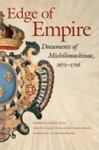
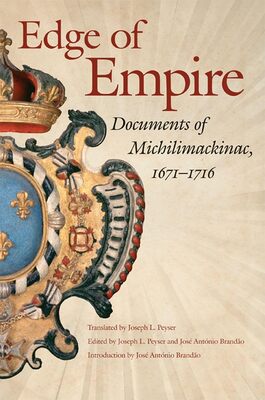
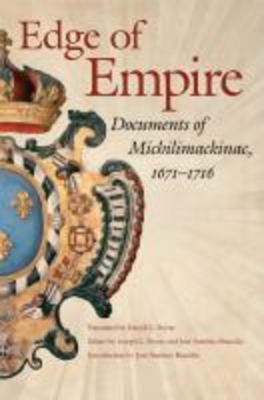
Edge of Empire: Documents of Michilimackinac, 1671-1716
Joseph L. Peyser and Jose Antonio Brandão.
Edge of Empire provides both an overview and an intensely detailed look at Michigan's Fort Michilimackinac at a very specific period of history. While the introduction offers an overview of the French fur trade, of the place of Michilimackinac in that network, and of what Michilimackinac was like in the years up to 1716, the body of the book is comprised of sixty-one French-language documents, now translated into English. Collected from archives in France, Canada, and the United States, the documents identify many of the people involved in the trade and reveal a great deal about the personal and professional relations among people who traded.
-
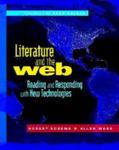
Literature and the Web: Reading and Responding with New Technologies
Robert Rozema, Allen Webb, and Sara Kajder
What it means to read and write has changed, making this an exhilarating and daunting time to be an English teacher. As teachers, Robert Rozema and Allen Webb understand this and offer a vision of how to teach with emerging tools in ways that amplify student learning. - Sara B. Kajder Author of The Tech-Savvy English Classroom Read the technology book that's about the content, not the computer. Literature and the Web is a thoughtful, nuts-and-bolts guide for any English teacher looking for effective tools to boost readers' engagement and improve their responses to literature. Adolescents love being online: browsing, blogging, socializing. Robert Rozema and Allen Webb show you how to tap into students' understanding and enthusiasm for the Net to find deeper meaning in literary texts. Rozema and Webb's proven strategies harness the power of the Web to:
- guide students into the world of the story
- develop their close reading ability
- scaffold their understanding of a text's social, cultural, and historical contexts
- provide them with authentic opportunities to respond to the text.
-
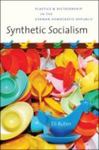
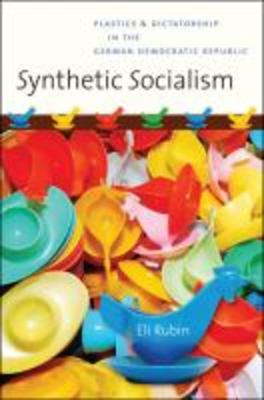
Synthetic Socialism: Plastics & Dictatorship in the German Democratic Republic
Eli Rubin
Eli Rubin takes an innovative approach to consumer culture to explore questions of political consensus and consent and the impact of ideology on everyday life in the former East Germany. Synthetic Socialism explores the history of East Germany through the production and use of a deceptively simple material: plastic. Rubin investigates the connections between the communist government, its Bauhaus-influenced designers, its retooled postwar chemical industry, and its general consumer population. He argues that East Germany was neither a totalitarian state nor a niche society but rather a society shaped by the confluence of unique economic and political circumstances interacting with the concerns of ordinary citizens.
To East Germans, Rubin says, plastic was a high-technology material, a symbol of socialism's scientific and economic superiority over capitalism. Most of all, the state and its designers argued, plastic goods were of a particularly special quality, not to be thrown away like products of the wasteful West. Rubin demonstrates that this argument was accepted by the mainstream of East German society, for whom the modern, socialist dimension of a plastics-based everyday life had a deep resonance.
-

Epistemology: New Essays
Quentin Smith
This volume offers a view of the current state of play in epistemology, in the form of twelve new essays by some of the philosophers who have most influenced the course of debates in recent years. Topics include epistemic justification, solipsism, skepticism, and modal, moral, naturalistic, and probabilistic epistemology. Such approaches as reliabilism, evidentialism, infinitism, and virtue epistemology are here developed further by the philosophers who pioneered them.
-
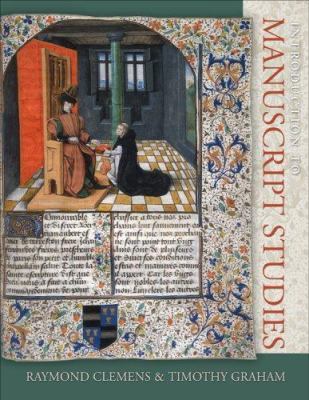
Intertexts: Studies in Anglo-Saxon Culture Presented to Paul E. Szarmach
Paul E. Szarmach, Virginia Blanton, and Helene Scheck
-
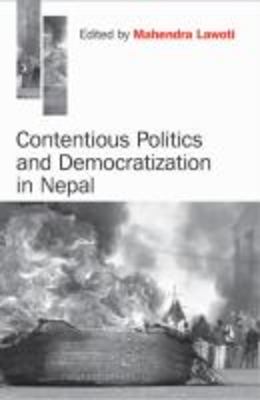
Multidimensional Poverty Measurement: Concepts and Applications
Udaya Wagle
Multidimensional approaches have increasingly been used to understand poverty, but have yet to be fully operationalized. This methodical and important book uses factor analysis and structural equations modelling to develop a multidimensional framework that integrates capability and social inclusion as additional poverty indicators. The empirical relevance of this methodological contribution is demonstrated through in-depth case studies of the United States and Nepal..
-
Discovering the Peoples of Michigan Reader
Lewis Walker
The DPOM Reader provides brief synopses for the first twenty-four books in the acclaimed Discovering the Peoples of Michigan series. Meant to be used as an overview and teaching tool for the series, this Reader provides a valuable entre into the Discovering the Peoples of Michigan Series, revealing the unique contributions that have been made by different and often unrecognized communities in Michigan's historical social identity
-
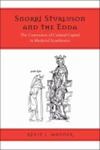
Snorri Sturluson and the Edda: The Conversion of Cultural Capital in Medieval Scandinavia
Kevin J. Wanner
Why would Snorri Sturluson (c. 1179-1241), the most powerful and rapacious Icelander of his generation, dedicate so much time and effort to producing the Edda, a text that is widely recognized as the most significant medieval source for pre-Christian Norse myth and poetics? Kevin J. Wanner brings us a new account of the interests that motivated the production of this text, and resolves the mystery of its genesis by demonstrating the intersection of Snorri's political and cultural concerns and practices.
The author argues that the Edda is best understood not as an antiquarian labour of cultural conservation, but as a present-centered effort to preserve skaldic poetry's capacity for conversion into material and symbolic benefits in exchanges between elite Icelanders and the Norwegian court. Employing Pierre Bourdieu's economic theory of practice, Wanner shows how modern sociological theory can be used to illuminate the cultural practices of the European Middle Ages. In doing so, he provides the most detailed analysis to date of how the Edda relates to Snorri's biography, while shedding light on the arenas of social interaction and competition that he negotiated.
A fascinating look at the intersections of political interest and cultural production, Snorri Sturluson and the Edda is a detailed portrait of both an important man and the society of his times.
-
History Education 101: The Past, Present, and Future of Teacher Preparation
Wilson J. Warren and D. Antonio Cantu
Historians and teacher educators nationwide are now engaged in discussions about the importance of history teacher preparation. Interest within the history profession about the teaching of K-12 history has increased significantly during the past two decades, particularly since the controversy over the National Standards for History's publication. This attention is evident not only in the historical professions' various publications, but also in the federal government's multi-million dollar Teaching American History Program and the No Child Left Behind Act. Professional historians are increasingly committed to improving the teaching of history at the K-12 level through many forms of collaboration. History Education 101's thirteen essays are organized into three sections: context, practice, and new directions. The essays' contributors, tenured faculty who teach history teaching methods courses in colleges and universities throughout the United States, focus on how history education has, is, and will be taught to new K-12 teachers throughout the United States. Perhaps more than ever, it is critical for Americans to understand the role of higher education in the preparation of future middle and high school history teachers. This book provides important insights for academics in history and education departments as well as other individuals who are concerned with the status and improvement of history teaching in the schools, particularly current and future elementary and secondary teachers and administrators.
-
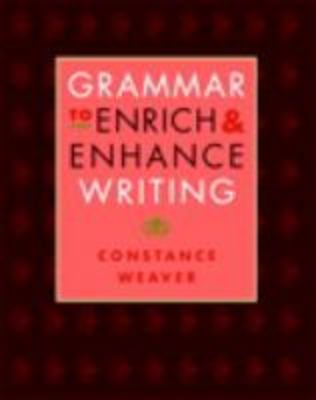
Grammar to Enrich & Enhance Writing
Constance Weaver and Jonathan Bush
Grammar to Enrich and Enhance Writing is Connie Weaver's latest treasure for grammar instruction that strengthens writing. Born from the ideas and research in her much-loved Teaching Grammar in Context, and benefiting from the creativity of her colleague Jonathan Bush, this new resource goes even further to bring the best research, theory, and practices into the classroom. Grammar to Enrich and Enhance Writing is three helpful books in one. In the first part, Weaver outlines the latest theories, research, and principles that underlie high-quality grammar instruction for writing. She demonstrates that specific, effective grammar-teaching practices:
- address all of the 6 Traits of writing instruction
- emphasize depth, not breadth
- should be positive, productive, and practical-not stodgy, "correct," and limiting
- must be incorporated throughout the writing process, not broken out in isolated units.
-

Yankees in Michigan
Brian C. Wilson
As Brian C. Wilson describes them in this highly readable and entertaining book, Yankees -- defined by their shared culture and sense of identity -- had a number of distinctive traits and sought to impose their ideas across the state of Michigan.
After the ethnic label of "Yankee" fell out of use, the off spring of Yankees appropriated the term "Midwesterner." So fused did the identities of Yankee and Midwesterner become that understanding the larger story of America's Midwestern regional identity begins with the Yankees in Michigan. -
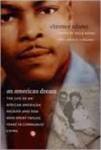
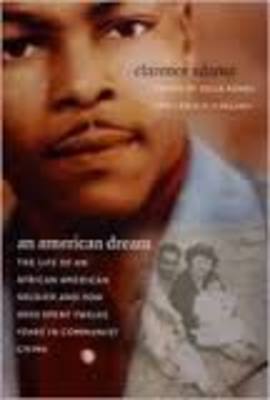
An American Dream: The Life of an African American Soldier and POW Who Spent Twelve Years in Communist China
Clarence Adams, Della Adams, and Lewis Carlson
Throughout his life, Clarence Adams exhibited self-reliance, ambition, ingenuity, courage, and a commitment to learning--character traits often equated with the successful pursuit of the American Dream. Unfortunately, for an African American coming of age in the 1930s and 1940s, such attributes counted for little, especially in the South. Adams was a seventeen-year-old high school dropout in 1947 when he fled Memphis and the local police to join the U.S. Army. Three years later, after fighting in the Korean War in an all-black artillery unit that he believed to have been sacrificed to save white troops, he was captured by the Chinese. After spending almost three years as a POW, during which he continued to suffer racism at the hands of his fellow Americans, he refused repatriation in 1953, choosing instead the People's Republic of China, where he hoped to find educational and career opportunities not readily available in his own country. While living in China, Adams earned a university degree, married a Chinese professor of Russian, and worked in Beijing as a translator for the Foreign Languages Press. During the Vietnam War he made a controversial anti-war broadcast over Radio Hanoi, urging black troops not to fight for someone else's political and economic freedoms until they enjoyed these same rights at home. In 1966, having come under suspicion during the Chinese Cultural Revolution, he returned with his wife and two children to the United States, where he was subpoenaed to appear before the House Committee on Un-American Activities to face charges of "disrupting the morale of American fighting forces in Vietnam and inciting revolution in the United States." After these charges weredropped, he and his family struggled to survive economically. Eventually, through sheer perseverance, they were able to fulfill at least part of the American Dream. By the time he died, the family owned and operated eight successful Chinese restaurants in his native Memphis.
-
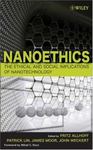
Nanoethics: The Ethical and Social Implications of Nanotechnology
Fritz Allhoff
Nanotechnology will eventually impact every area of our world Nanoethics seeks to examine the potential risks and rewards of applications of nanotechnology. This up-to-date anthology gives the reader an introduction to and basic foundation in nanotechnology and nanoethics, and then delves into near-, mid-, and far-term issues. Comprehensive and authoritative, it: Goes beyond the usual environmental, health, and safety (EHS) concerns to explore such topics as privacy, nanomedicine, human enhancement, global regulation, military, humanitarianism, education, artificial intelligence, space exploration, life extension, and more Features contributions from forty preeminent experts from academia and industry worldwide, reflecting diverse perspectives Includes seminal works that influence nanoethics today Encourages an informed, proactive approach to nanoethics and advocates addressing new and emerging controversies before they impede progress or impact our welfare This resource is designed to promote further investigations and a broad and balanced dialogue in nanoethics, dealing with critical issues that will affect the industry as well as society. While this will be a definitive reference for students, scientists in academia and industry, policymakers, and regulators, it′s also a valuable resource for anyone who wants to understand the challenges, principles, and potential of nanotechnology.
-
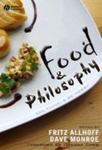
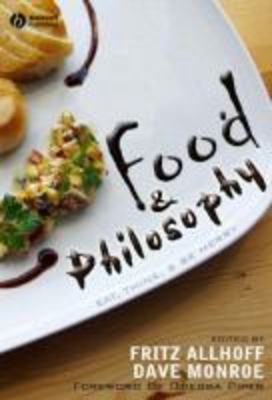
Food & Philosophy: Eat, Drink, and Be Merry
Fritz Allhoff and David Monroe
Food & Philosophy offers a collection of essays which explore a range of philosophical topics related to food; it joins Wine & Philosophy and Beer & Philosophy in in the "Epicurean Trilogy." Essays are organized thematically and written by philosophers, food writers, and professional chefs.
- Provides a critical reflection on what and how we eat can contribute to a robust enjoyment of gastronomic pleasures
- A thoughtful, yet playful collection which emphasizes the importance of food as a proper object of philosophical reflection in its own right
-
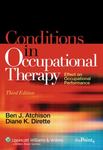
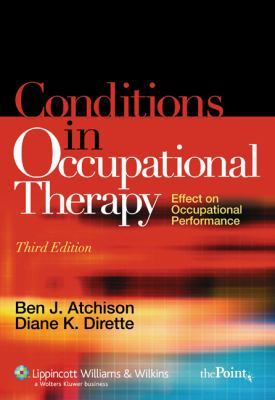
Conditions in Occupational Therapy: Effect on Occupational Performance
Ben J. Atchison and Diane K. Dirette
his Third Edition focuses on chronic health problems and their impact on an individual's physical, cognitive, psychological, and social capabilities. Readers learn how the patient's age, life tasks, and living environment affect occupational therapy needs, and how to determine what occupational therapy services to provide. Chapters present the etiology, symptoms, prognosis, and progression of conditions frequently encountered in practice. Case studies at the end of every chapter help students apply the content to real-life clinical situations.
This edition includes new chapters on anxiety disorders and cardiopulmonary disorders. The expanded art program includes more photos, drawings, charts, and graphs.
-
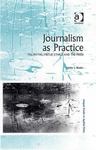
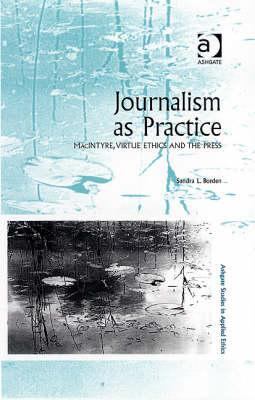
Journalism as Practice: MacIntyre, Virtue Ethics and the Press
Sandra Borden
The process of turning the news into just another product has been going on since at least the nineteenth century. But this process of commodification has accelerated since a few, publicly owned conglomerates have come to dominate the global media market. The emphasis on the bottom line has resulted in newsroom budget cuts and other business strategies that seriously endanger good journalism. Meanwhile, the growing influence of the Internet and partisan commentary has led even journalists themselves to question their role.In this book, Sandra L. Borden analyzes the ethical bind of public-minded journalists using Alasdair MacIntyre's account of a 'practice'. She suggests that MacIntyre's framework helps us to see how journalism is normatively defined by the pursuit of goods appropriate to its purpose - and how money and other 'external' goods threaten that pursuit. Borden argues that developing and promoting the kind of robust group identity implied by the idea of a practice can help journalism better withstand the moral challenges posed by commodification.This book applies MacIntyre's virtue theory to journalism with philosophical rigor, and at the same time is informed by the most current thinking from communication and other disciplines, including organizational studies and sociology.
-
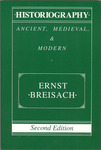
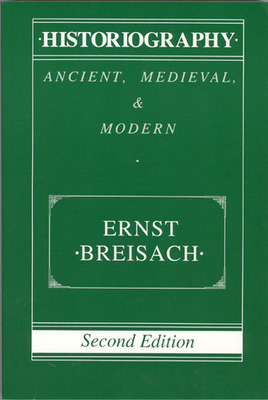
Historiography : Ancient, Medieval, & Modern
Ernst Breisach
In this pioneering work, Ernst Breisach presents an effective, well-organized, and concise account of the development of historiography in Western culture. Neither a handbook nor an encyclopedia, this up-to-date third edition narrates and interprets the development of historiography from its origins in Greek poetry to the present, with compelling sections on postmodernism, deconstructionism, African-American history, women’s history, microhistory, the Historikerstreit, cultural history, and more. The definitive look at the writing of history by a historian, Historiography provides key insights into some of the most important issues, debates and innovations in modern historiography.
Praise for the first edition: “Breisach’s comprehensive coverage of the subject and his clear presentation of the issues and the complexity of an evolving discipline easily make his work the best of its kind.”—Lester D. Stephens, American Historical Review -
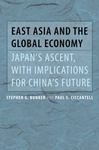
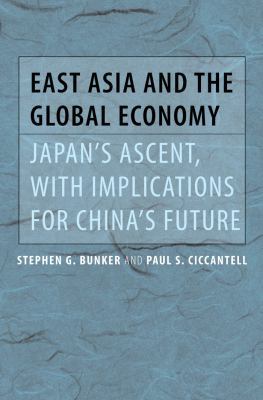
East Asia and the Global Economy: Japan's Ascent, with Implications for China's Future
Stephen Bunker and Paul Ciccantell
After World War II, Japan reinvented itself as a shipbuilding powerhouse and began its rapid ascent in the global economy. Its expansion strategy integrated raw material procurement, the redesign of global transportation infrastructure, and domestic industrialization. In this authoritative and engaging study, Stephen G. Bunker and Paul S. Ciccantell identify the key factors in Japan’s economic growth and the effects this growth had on the reorganization of significant sectors of the global economy.
Bunker and Ciccantell discuss what drove Japan’s economic expansion, how Japan globalized the work economy to support it, and why this spectacular growth came to a dramatic halt in the 1990s. Drawing on studies of ore mining, steel making, corporate sector reorganization, and port/rail development, they provide valuable insight into technical processes as well as specific patterns of corporate investment.
East Asia and the Global Economy introduces a theory of "new historical materialism" that explains the success of Japan and other world industrial powers. Here, the authors assert that the pattern of Japan’s ascent is essential for understanding China’s recent path of economic growth and dominance and anticipating what the future may hold.