
The goal is to record most books written or edited by Comparative Religion faculty. We will start by entering the most recent publications first and work our way back to older books. There is a WMU Authors section in Waldo Library, where most of these books can be found.
.With a few exceptions, we do not have the rights to put the full text of the book online, so there will be a link to a place where you can purchase the book.
If you are a faculty member and have a book you would like to include in the WMU book list, please contact [email protected]
-
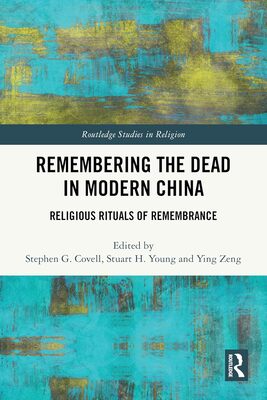
Remembering the Dead in Modern China: Religious Rituals of Remembrance
Stephen G. Covell, Ying Zeng, and Stuart H. Young
Remembering the Dead in Modern China is a groundbreaking interdisciplinary volume that brings together diverse scholarly perspectives to examine the complex and evolving practices of death, dying, and remembrance in modern China. Studying the ideals and practices of caring for the dead is essential to understanding social and cultural change in modern China. The chapters in this volume elucidate the many ways in which remembrance of the dead challenges established norms.
The contributors show how acts of remembrance provide opportunities to find meaning in the untimely loss of loved ones; to challenge cultural conventions by generating significance from absence in burial rituals; to refashion mourning rites in response to modern political demands; and to forge bonds between urban and rural mortuary communities. The chapters trace transformations in how the dead are remembered across a broad social spectrum, from the Imperial Court to factory workers in Maoist China to contemporary Christian converts. Taken together, they offer valuable insight into how political, economic, and religious changes have influenced people's interactions with the dead and how those interactions, in turn, reshape the political, economic, and religious landscape.
Featuring original research and thoughtful analysis, this volume makes a significant contribution to death studies, Chinese studies, religious studies, history of religion, anthropology, and sociology. This book will appeal to scholars and students interested in the intersection of tradition and modernity in Chinese cultural practices surrounding mortality.
-
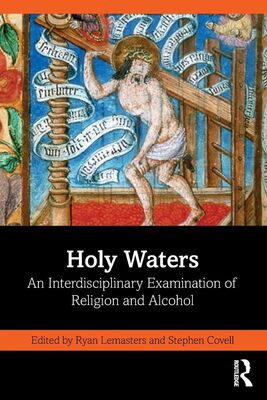
Holy Waters: An Interdisciplinary Examination of Religion and Alcohol
Stephen Covell and Ryan Lemasters
This edited volume brings together scholars from across disciplines to examine the relationship between religion and alcohol.
It examines the historical, social, ritual, economic, political, and cultural relationship between religion and alcohol across time periods and around the world. Twelve chapters are tied together by two major themes: first, gender identity, and its intersection with religion and alcohol; second, identity construction in religious communities, demonstrating how alcohol can be used as a distinguishing factor for religious, ethnic, and national identity. A key focus of the volume is how alcohol can bridge and divide the point at which the sacred and secular meet.
With its interdisciplinary approach and engaging style, this book is an essential resource for undergraduate and graduate students in religion departments and appeals to scholars of material culture, food, and alcohol. Additionally, the book is of interest to professionals in the alcohol industry, particularly those involved in microbrewing and winemaking, who are interested in understanding the historical and cultural contexts of their craft.
-
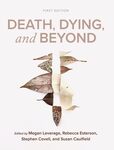
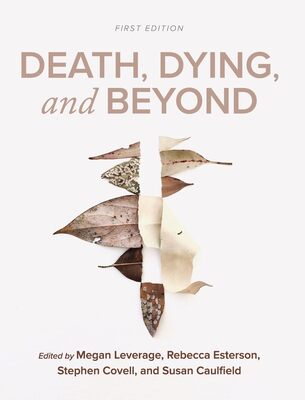
Death, Dying, and Beyond
Stephen Covell, Megan Leverage, Susan Caulfield, and Rebecca Esterson
Death, Dying, and Beyond presents students with a collection of thought-provoking articles and essays aiming to demystify the concepts of death, dying, and what follows. The anthology features a constructivist approach, incorporating a range of western and non-western contexts to provide a comprehensive view of these inevitable stages of life. This book is structured into three sections. The first section investigates the conceptualization of death itself, addressing questions around the criteria for determining death and the idea of social death. In the second section, it contemplates the process of dying, the psychological and societal facets of facing mortality, and the ethics surrounding end-of-life decisions. The final section examines the aftermath of death, including mournful practices, interactions with the deceased, and the impacts on cultural and personal narratives. Death, Dying, and Beyond is an ideal resource for courses in sociology, religious studies, psychology, philosophy, nursing, English, and law. It involves analyzing perspectives on death and dying and fosters an environment for students to examine their values and attitudes towards mortality.
-
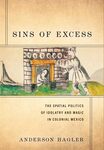
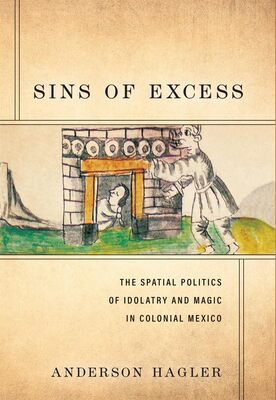
Sins of Excess: The Spatial Politics of Idolatry and Magic in Colonial Mexico
Anderson Hagler
For the Spanish colonizers of Mexico in the sixteenth century, the concept of "excess"--even the word itself--covered a multitude of sins, including idolatry and magic. In Sins of Excess, Anderson Hagler uses the language of excess as a lens for examining how the colonizers of New Spain conflated cultural diversity into a superficially--and usefully--homogeneous whole under the pejorative umbrella of excess in its many forms. In this way, Hagler suggests, deploying excess and its derivatives influenced how Spanish colonists came to view the practices of the Indigenous population. In the viceroyalty of New Spain descriptive terms such as "harms and excesses" (daños y excesos) not only referred to crimes like murder and robbery (muertes y robos) but also became generalized to refer to Native religious, social, or cultural practices that fell outside the boundaries of Catholic orthodoxy. A reading of royal decrees and ecclesiastical missives, commoner testimony from criminal cases, and the trials of the Mexican Inquisition reveals a calculated rhetorical strategy that gathered non-European social-cultural experiences into a negative category. Consequently, "excess" provides an analytical framework for understanding how colonial officials interacted with Indigenous peoples and those of African descent as they attempted to impose social order. While primary sources in non-European languages such as Nahuatl reveal a similar preoccupation with excess, Hagler reveals in this insightful book how incongruities between Nahua and Spanish interpretations of the term extended through the colonial era and generated increasing conflict.
-
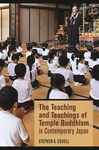
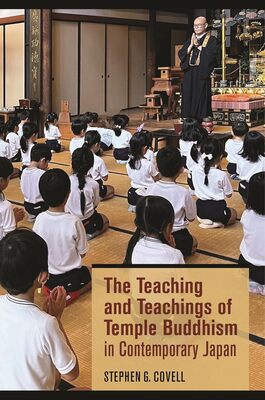
The Teaching and Teachings of Temple Buddhism in Contemporary Japan
Stephen Grover Covell
How have Buddhist teachings come to be in modern and contemporary Japan and how are they taught? This pioneering work seeks to answer these questions by highlighting the public teachings of Temple Buddhism institutions, in particular Temple Buddhism kindergartens and Buddhist secondary schools and colleges. The community outreach provided by these Buddhist facilities is far greater than any other with the possible exception of funerals yet until now it has received little attention from scholars of Japanese religion. After determining what is taught in Buddhist education and how, Stephen Covell introduces readers to a select group of monks who undergo some of the most grueling practices in Japanese Temple Buddhism to determine if the public-facing teachings of Buddhist education are unique or similar to those of elite Buddhist practitioners. The teachings and sites of teaching examined here include but are not limited to classical doctrinal studies and temples focused on the education of Buddhist clergy. Covell uncovers the arguments made by priests involved in morals education, the dharma talks of famous ascetics, and the ways in which laws and legal codes have changed Buddhist education. He looks at what is taught on the ground, online, and in popular texts to discuss the current teachings embraced as Buddhism within the institutions of Temple Buddhism. Among his numerous findings is such teachings and worldview are remarkably similar to those of New Religions and Buddhist lay movements as outlined by Japan religion scholars and government bodies in charge of education. The Teaching and Teachings of Temple Buddhism in Contemporary Japan will be welcomed by students and scholars in Japanese religious studies and early childhood and higher education as well as those interested in current Buddhist practice and teachings in general.
-
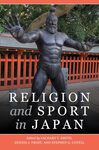
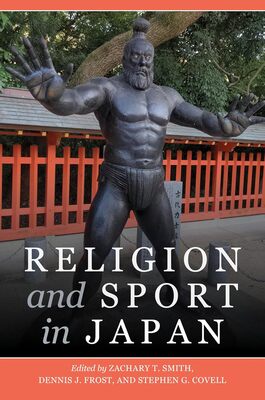
Religion and Sport in Japan
Stephen G. Covell, Zachary T. Smith, and Dennis J. Frost
The sports world's attention was focused on Japan for the Tokyo 2020 Summer Olympics and Paralympics. The years-long buildup to and aftermath of the games occurred in the midst of the global pandemic, which delayed the event until 2021. Given all of this, there is perhaps no better time to delve into an often overlooked but critical facet of sport in Japan: religion. Religion has long been a part of the Japanese sport tradition--from Shugendō practitioners offering sumo bouts to the gods to soccer players of all ages praying for success at Shintō shrines; from the use of meditation and ritual in martial arts to gain focus or superhuman abilities to religious organizations sponsoring sporting events and teams and school sports clubs. Religion and Sport in Japan brings together historians and sport and religious studies specialists from Japan, the US, and Europe to address sport's ties to corporate and national identity, politics, environmentalism, ritual, and sacred space. Major themes discussed include the spiritual geographies of sport, sport as invented tradition, technologies of self, material culture, and civil religion. The chapters are written so that sport historians with no background in the study of Japan or religious studies scholars who have never before examined the world of sport will find the material accessible. To provide further grounding for non-field specialists, the volume begins with two background chapters that introduce sport studies in Japan and the study of religion and sport.
-
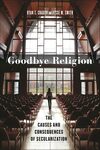
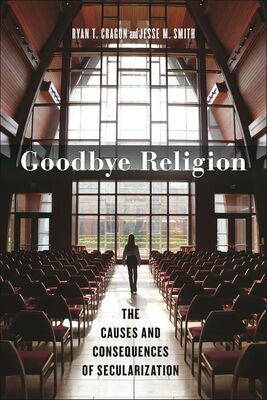
Goodbye Religion: The Causes and Consequences of Secularization
Jesse M. Smith and Ryan T. Cragun
One of the largest changes in American culture over the last fifty years has been the increase in people exiting religion. Goodbye Religion explores why there has been such an upswing among those who identify as nonreligious, and what the societal implications are of this move towards less religiosity. Utilizing nationally representative data and more than a hundred in-depth interviews with people who leave their religion behind, Ryan T. Cragun and Jesse M. Smith examine the variety of social, psychological, and environmental conditions behind the exiting process, as well as what people do with the time they used to devote to religious observance. They show that for most people who leave, abandoning religion is not a crisis, and does not generally disrupt their health, charitable giving, or volunteering. Drawing on the data, Cragun and Smith argue that the fears among some that massive religious exit will result in a decline in family values or less civic engagement are unfounded, and that those who become nonreligious remain engaged in society and continue to strive to make the world a better place. At a time where more and more individuals are questioning the implications of our increasingly secular society, Goodbye Religion offers an engaging and fascinating analysis into what religious exiting--and secularization broadly--means for American society.
-
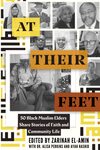
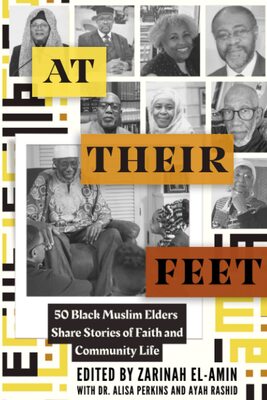
At Their Feet: 50 Black Muslim Elders Share Stories of Faith and Community Life
Alisa Perkins
AT THEIR FEET is a rare opportunity to both pay homage to, and learn from, one of the most unique communities to ever grace the planet: African-American Muslim Elders born in the 1930s-1950s.
To sit “at the feet” indicates an exchange between student and teacher. Sage and apprentice. Master and disciple.
Inside, you’ll learn and read stories on a variety of life experiences. You’ll read how some of our elders accepted Islam as their way of life on their own in their early teens. You’ll read about experiences traversing Jim Crow. You’ll read about family and business and building communities from the ground up.
The 50 essays within are ripe with secrets and insights that can help the current and future generations usher in new social heights.
AT THEIR FEET is a call to rediscover the powerful age-old practice of learning from elders so that we may illuminate and become the best of humankind.
-
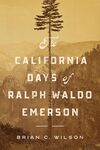
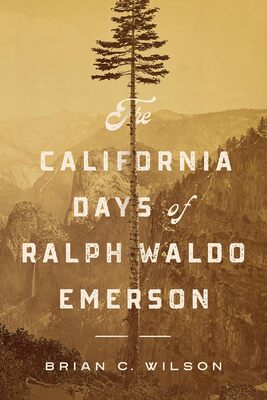
California Days of Ralph Waldo Emerson
Brian C. Wilson
In the spring of 1871, Ralph Waldo Emerson boarded a train in Concord, Massachusetts, bound for a month-and-a-half-long tour of California--an interlude that became one of the highlights of his life. On their journey across the American West, he and his companions would take in breathtaking vistas in the Rockies and along the Pacific Coast, speak with a young John Muir in the Yosemite Valley, stop off in Salt Lake City for a meeting with Brigham Young, and encounter a diversity of communities and cultures that would challenge their Yankee prejudices. Based on original research employing newly discovered documents, The California Days of Ralph Waldo Emerson maps the public story of this group's travels onto the private story of Emerson's final years, as aphasia set in and increasingly robbed him of his words. Engaging and compelling, this travelogue makes it clear that Emerson was still capable of wonder, surprise, and friendship, debunking the presumed darkness of his last decade.
-
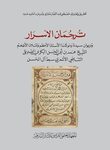
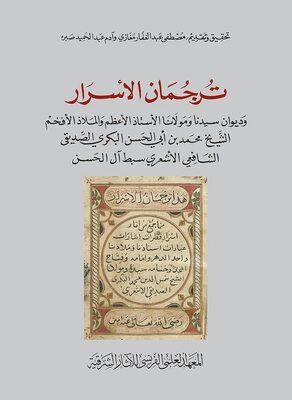
Turjumān al-asrār : wa-dīwān sayyidinā wa-mawlānā al-ustādh al-aʻẓam wa-al-malādh al-afkham al-Shaykh Muḥammad ibn Abī al-Ḥasan al-Bakrī al-Ṣiddīqī al-Shāfiʻī al-Ashʻarī sibṭ Āl al-Ḥasan /
Mustafa Mughazy and Adam Sabra
Based on a study of twelve Arabic manuscripts, The Interpreter of Secrets is a critical edition of the entire surviving corpus of the poetry of Muhammad ibn Abi al-Hasan al-Bakri (930-994/1524-1586), a leading jurist, Sufi, and literary figure in sixteenth-century Cairo. The texts of the poems are accompanied by a critical apparatus including all of the plausible variant readings and alternative versions of the poems. Al-Bakri was a major literary figure, and his Sufi poetry belongs to a tradition that draws on the work of poets such as Ibn al-Farid, Ibn al-'Arabi, al-Busiri, and 'Ali Wafa. In addition to their literary value, the poems are an important source for the study of Sufi theology and practice in Ottoman Egypt, including to such topics as the cult of the saints, the use of coffee for ritual purposes, the controversial appropriation of Ibn al-Arab's monist theology, and the establishment of sacred lineages. The editors have also included short Arabic and English introductions and an appendix that identifies the manuscript sources for each poem. This book will be of interest to students of Arabic literature, Sufism, and Ottoman intellectual history.
-
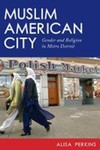
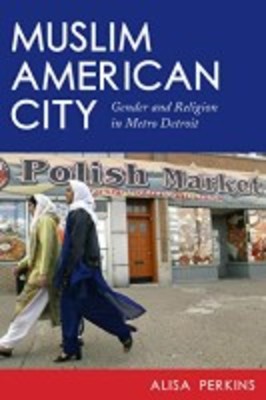
Muslim American City: Gender and Religion in Metro Detroit
Alisa Perkins
In 2004, the al-Islah Islamic Center in Hamtramck, Michigan, set off a contentious controversy when it requested permission to use loudspeakers to broadcast the adhān, or Islamic call to prayer. The issue gained international notoriety when media outlets from around the world flocked to the city to report on what had become a civil battle between religious tolerance and Islamophobic sentiment. The Hamtramck council voted unanimously to allow mosques to broadcast the adhān, making it one of the few US cities to officially permit it through specific legislation.
Muslim American City explores how debates over Muslim Americans’ use of both public and political space have challenged and ultimately reshaped the boundaries of urban belonging. Drawing on more than ten years of ethnographic research in Hamtramck, which boasts one of the largest concentrations of Muslim residents of any American city, Alisa Perkins shows how the Muslim American population has grown and asserted itself in public life. She explores, for example, the efforts of Muslim American women to maintain gender norms in neighborhoods, mosques, and schools, as well as Muslim Americans’ efforts to organize public responses to municipal initiatives. Her in-depth fieldwork incorporates the perspectives of both Muslims and non-Muslims, including Polish Catholics, African American Protestants, and other city residents.
Drawing particular attention to Muslim American expressions of religious and cultural identity in civil life—particularly in response to discrimination and stereotyping—Perkins questions the popular assumption that the religiosity of Muslim minorities hinders their capacity for full citizenship in secular societies. She shows how Muslims and non-Muslims have, through their negotiations over the issues over the use of space, together invested Muslim practice with new forms of social capital and challenged nationalist and secularist notions of belonging. -

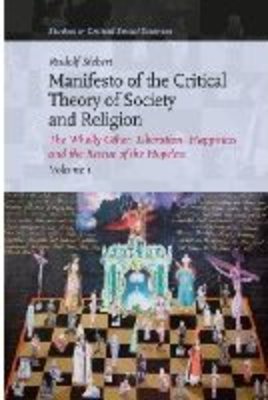
The Evolution Of The Critical Theory Of Religion And Society : Union, Disunion And Reunion Of The Sacred And Profane
Rudolf J. Siebert
This book describes the structure and dynamic of the 'critical theory of religion and society' (CRTS), which my friends and I have developed in Europe and America, since the end of World War II in continual discourse with the 'critical theory of society' of the Frankfurt School, from 1946-2020. The book is rooted in the often personal experience of World War II, the following restauration period, the Cold War, and the conflict between West and the Islamic Middle East, Africa and Far East.
-
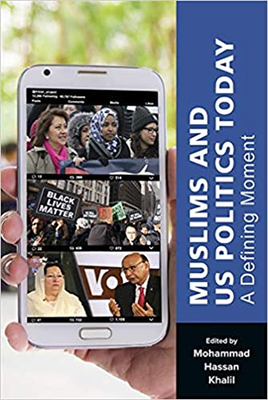
Muslims and US Politics Today: A Defining Moment
Alisa Perkins
The twenty-first century has been a volatile period for American Muslims. Anti-Muslim hate crimes peaked after September 11, 2001, then increased again dramatically in parallel with the candidacy and presidency of Donald Trump. Yet American Muslims now have unprecedented avenues of influence in US politics. Muslims and US Politics Today explores the various representations of Muslims in American political and civic life, the myriad ways American Muslims are affected by politics, and how American Muslims are engaging political life as individuals and communities. This integrative volume reaches back to presidential elections after 9/11 (Edward E. Curtis IV), further back to Iranian immigrants after the Iranian Revolution (Mohsen Mostafavi Mobasher), and back even to fundamentals of religious freedom in the United States (Kambiz GhaneaBassiri; Mucahit Bilici). Aspects of anti-Muslim politics and marginalization, as well as mobilization and activism, are covered in essays by Salah D. Hassan, Evelyn Alsultany, Juliane Hammer, Alisa Perkins, and Sally Howell. In a final section on rethinking Muslim politics, Donna Auston and Sylvia Chan-Malik dialogue on Black American Islam and Junaid Rana looks broadly to a global Muslim left. In this critically-timed volume, editor Mohammad Hassan Khalil has drawn together leading scholars to provide a deep look at the rich political history and future of American Muslims.
-

The World Religions In Idealistic And Materialistic Perspective : The Loss And Recovery Of The Idea
Rudolf J. Siebert
This book is concerned with the loss of the idea in modernity and its possible rediscovery in post modernity. Marx and Engels define the idealist as a man who presupposes a divine being of some kind before nature and human history: and the materialist as a man without such presupposition. For the critical theory of religion or dialectical religiology, an idealist is a man who like Anselm of Canterbury, presupposes a highest idea, which must contain being, otherwise it would not be the highest idea. An idealist is a man who presupposes this ontological proof for the existence of God. It is the thesis of this book that the German historical materialist superseded the German historical idealists too abstractly and that this resulted with Lenin in an inadequate theory and politics of religion and the later turn into red fascism and the victorious neo-liberal counter revolution in 1889, in spite of the great patriotic war and the heroic victory over European fascism. The purpose of the book is to prepare a new theory of revolution or better still provolution, which is open for progressive elements in religion or pro-ligion
-
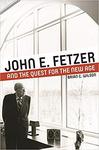
John E. Fetzer and the Quest for the New Age
Brian C. Wilson
John E. Fetzer and the Quest for the New Age follows the spiritual sojourn of John E. Fetzer, a Michigan business tycoon. Born in 1901 and living most of his life in Kalamazoo, Fetzer parlayed his first radio station into extensive holdings in broadcasting and other enterprises, leading to his sole ownership of the Detroit Tigers in 1961. By the time he died in 1991, Fetzer had been listed in Forbes magazine as one of the four hundred wealthiest people in America. And yet, business success was never enough for Fetzer-his deep spiritual yearnings led him from the Christianity of his youth to a restless exploration of metaphysical religions and movements ranging from Spiritualism, Theosophy, Freemasonry, UFOology, and parapsychology, all the way to the New Age as it blossomed in the 1980s.
-
Sociology of Religion: A Critical Primer
Walter A. Jensen
Written with the aim of increasing public interest in the study of religion, this primer makes available, to both the student and layman alike, a substantial amount of practical information about the modern non-theological study of religion. Focusing on three key areas of interest -- (1) the difficulties in defining religion, (2) the secularization / desecularization debate, and (3) an overview of Prof. Rudolf J. Siebert's critical theory of religion -- the reader will easily gain a broad, but thorough, overview of the sociology of religion.
-
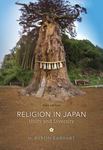
Religion in Japan: Unity and Diversity
H. Byron Earhart
This standard text explores religion in Japan as a complex tapestry of different religious strands, reflecting both the unity and diversity of Japanese culture, a theme Earhart pioneered in the first edition (1969) of this enduring, classic book--a theme he has devoted subsequent decades to refining through cutting-edge scholarship and keen observation of the evolving religious scene. Tracing the development of religious traditions from the prehistoric era through modern times, Earhart explores the vital influence of Shinto, Buddhism, Daoism, Confucianism, and folk religion. Presuming no technical or academic background, the text guides students to key Japanese religious themes, which include the proximity of humans and gods, the religious character of the family, the bond between religion and the nation, and the pervasiveness of religion in everyday life. This new edition updates the description and interpretation of the entire history of religion in Japan in light of the latest developments in the field. In the latter chapters, changes in the contemporary scene are highlighted, discussing Tokyo Disneyland, manga, and anime as "alternative reality," as well as the innovations in more "traditional" events such as wedding ceremonies and rites for the dead.
-
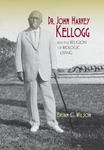
Dr. John Harvey Kellogg and the Religion of Biologic Living
Brian C. Wilson
"While the tradition of purveyors of alternative or spiritualized medicine stretches back to the colonial period, few have achieved the superstar status of Dr. John Harvey Kellogg and his Battle Creek Sanitarium. In its hey-day, the "San" was a combination spa and Mayo Clinic. Founded in 1866 under the auspices of the Seventh-day Adventist Church and presided over by the charismatic leadership of Kellogg, it catered to many well-heeled health seekers including Henry Ford, John D. Rockefeller, and Presidents Taft and Harding. It also supported a hospital, research facilities, a medical school, a nursing school, several health food companies, and a publishing house dedicated to producing materials on health and wellness. Rather than focusing on Kellogg as the eccentric creator of corn flakes or a megalomaniacal quack, Brian C. Wilson takes his role as a theological innovator seriously and places his religion of "Biologic Living" in an on-going tradition of sacred health and wellness. Wilson traces the development of this theology of physiology from its roots in antebellum health reform and Seventh-day Adventism to its ultimate accommodation of genetics and eugenics in the Progressive Era"--Provided by publisher.
-
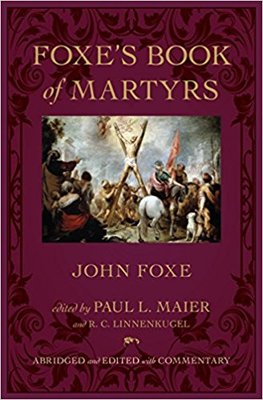
Foxe's Book of Martyrs
John Foxe
Foxe's Book of Martyrs is one of the most influential and well-known books in history, as well as one of the top-sellers of the past, right up there with the Bible itself. Immensely popular in Foxe's own sixteenth century, its influence has been felt throughout literature. Copies of the original text (Acts and Monuments) were chained beside the Bible in churches of England, and even sailed with English pirates.
This was not a book designed to comfort, but instead to present the truth of the persecution faced by Protestant Christians in hostile environments. The inscription from the 1563 edition--now commonly known as Foxe's Book of Martyrs--indicates the gravity of the task: "[In] latter and perilous days . . . the great persecutions and horrible troubles . . . [are here] gathered and collected according to true copies and writings . . . of the parties themselves that suffered." Foxe was committed to commemorating the ultimate sacrifice of those who gave their lives for the sake of their faith.
Paul L. Maier brings his exceptional mind for history to bear on Foxe's work in this new edition. While abridgement of the original 2,100 pages was necessary, Maier does include every martyr, and text was changed only where modern readers may not readily understand the original archaic wording.
John Foxe (1516-1587) was an academic and zealous student of the Scriptures, leading to his persecution as a Protestant by the Catholic rulers of his day. Beyond his work in pastoral ministry, Foxe continued to work on his martyrology until his death.
-
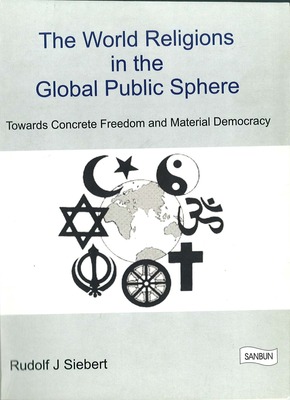
The World Religions in the Global Public Sphere: Towards Concrete Freedom and Material Democracy
Rudolf Siebert, Michael Ott, and Karen Shoup-Pilarski
-
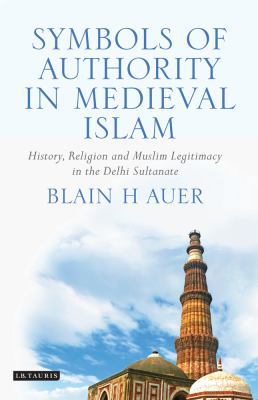
Symbols of Authority in Medieval Islam : History, Religion, and Muslim Legitimacy in the Delhi Sultanate
Blain Auer
With the execution of the Abbasid caliph Al-Musta'sim in 1258, Sunni authority and legitimacy in Baghdad began to disintegrate. Amidst a global shift in Islamic authority, the recently established Delhi Sultanate became a new focal point for the development of Muslim societies. Here Blain Auer investigates the ways three historians living in India during the thirteenth and fourteenth centuries, Minhaj Siraj Juzjani, Ziya' al-Din Barani and Shams al-Din Siraj 'Afif, narrated the religious values of Muslim sovereigns through the process of history writing. Aiding the project of empire building, these intellectuals drew up an idea of an Islamic heritage that invented and reinterpreted conceptions of a historically rooted Muslim authority. With fresh insights on the intersections between religion, politics, and historiography, this book will be indispensable for all those interested in Islamic studies, history, religion, politics, and South Asia.
-
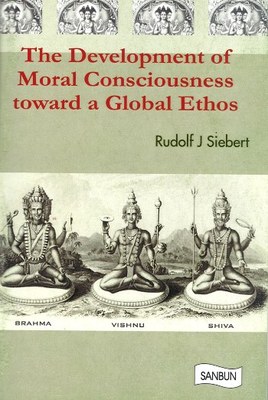
The Development of Moral Consciousness Toward a Global Ethos
Rudolf Siebert
The book traces the evolution of the ethical or moral consciousness through the different world-religions, as well as through the secular modern enlightenment movements and humanisms. (From the book distributor.)
-
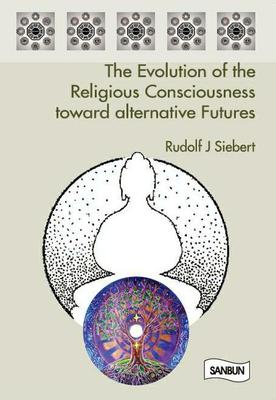
The Evolution of the Religious Consciousness Toward Alternative Futures
Rudolf Siebert
The book traces the development of the world-religions in the context of the timeline of human evolution.
Source: Bookadda.com
-
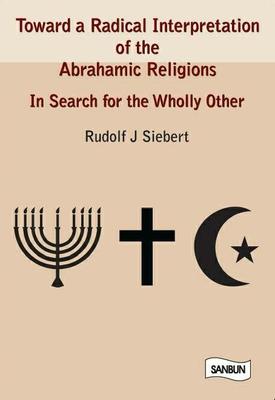
Toward a Radical Interpretation of the Abrahamic Religions : in Search for the Wholly Other
Rudolf Siebert
This book deals with the disharmony, which broke into the religious community through the bourgeois, Marxian, and Freudian enlightenment, as well as with the possibility of a new Post-Modern harmony. After the bourgeois enlightenment and revolution the religious community differentiated itself into three groups: 1.The simple and naive believers; 2. the so called educated or enlightened people, characterized by analytical understanding and reflection; 3. the dialectical philosophers, for whom faith and reason had been reconciled by the power of the dialectical notion: the self-particularization and self-estrangement as well as the self-singularization and self-reconciliation of the Universal. While for the dialectical philosophers harmony has returned between religious revelation and autonomous reason, this has not yet happened for the masses of the people living in modern civil society. There exists the knowledge in the public sphere, which something is missing in the secular world- the longed for, imageless, and nameless utterly Other than the horror and terror of nature and history. The comparative, dialectical religiology presented in this book constitutes the attempt, to promote, universalize, and globalize a new synthesis of the modern antithesis between the religious and the secular, through a radical naturalistic and humanistic interpretation, translation, and inversion of the sacred texts particularly of the Abrahamic religions.
(from publisher)