
The goal is to record most books written or edited by Comparative Religion faculty. We will start by entering the most recent publications first and work our way back to older books. There is a WMU Authors section in Waldo Library, where most of these books can be found.
.With a few exceptions, we do not have the rights to put the full text of the book online, so there will be a link to a place where you can purchase the book.
If you are a faculty member and have a book you would like to include in the WMU book list, please contact [email protected]
-
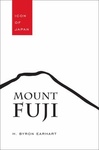
Mount Fuji : Icon of Japan
H. Byron Earhart
Illustrated with color and black-and-white images of the mountain and its associated religious practices, H. Byron Earhart's study utilizes his decades of fieldwork--including climbing Fuji with three pilgrimage groups--and his research into Japanese and Western sources to offer a comprehensive overview of the evolving imagery of Mount Fuji from ancient times to the present day. Included in the book is a link to his twenty-eight minute streaming video documentary of Fuji pilgrimage and practice, Fuji: Sacred Mountain of Japan.
Beginning with early reflections on the beauty and power associated with the mountain in medieval Japanese literature, Earhart examines how these qualities fostered spiritual practices such as Shugendo, which established rituals and a temple complex at the mountain as a portal to an ascetic otherworld. As a focus of worship, the mountain became a source of spiritual insight, rebirth, and prophecy through the practitioners Kakugyo and Jikigyo, whose teachings led to social movements such as Fujido (the way of Fuji) and to a variety of pilgrimage confraternities making images and replicas of the mountain for use in local rituals.
Earhart shows how the seventeenth-century commodification of Mount Fuji inspired powerful interpretive renderings of the "peerless" mountain of Japan, such as those of the nineteenth-century print masters Hiroshige and Hokusai, which were largely responsible for creating the international reputation of Mount Fuji. In the eighteenth and nineteenth centuries, images of Fuji served as an expression of a unique and superior Japanese culture. With its distinctive shape firmly embedded in Japanese culture but its ethical, ritual, and spiritual associations made malleable over time, Mount Fuji came to symbolize ultranationalistic ambitions in the 1930s and early 1940s, peacetime democracy as early as 1946, and a host of artistic, naturalistic, and commercial causes, even the exotic and erotic, in the decades since.
-
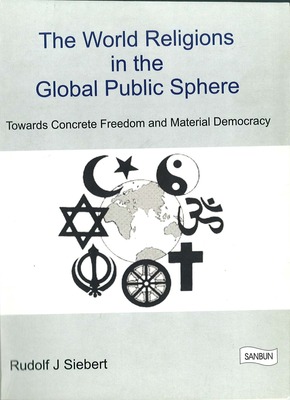
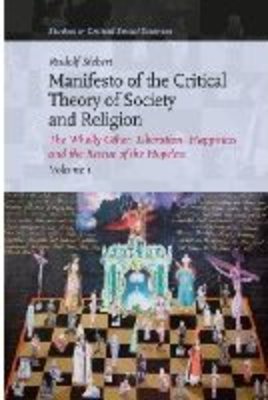
Manifesto of the Critical Theory of Society and Religion: The Wholly Other, Liberation, Happiness and the Rescue of the Hopeless
Rudolf Siebert
The Manifesto develops further the Critical Theory of Religion intrinsic to the Critical Theory of Society of the Frankfurt School into a new paradigm of the Psychology, Sociology, Philosophy and Theology of Religion. Its central theme is the theodicy problem. The Manifesto approaches this theme in the framework of comparative religion and critical political theology in a narrative and discursive fashion. In search of a solution to the theodicy problem, the Manifesto explores , trends in civil society toward Alternative Future I (the Totally Administered Society), Alternative Future II (the Militarized Society), and Alternative Future III (the Reconciled Society) in the horizon of the longing for the Wholly Other as perfect justice and unconditional love. Toward that goal it relies on both the critical theory of society as developed by Max Horkheimer, Ernst Bloch, Walter Benjamin, Theodor W. Adorno, and others, and on the new political theology of Johannes B. Metz, Helmut Peukert, and Edmund Arens.
-
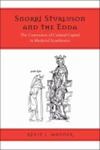
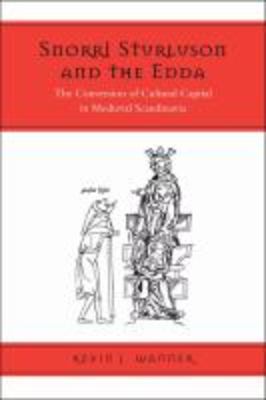
Snorri Sturluson and the Edda: The Conversion of Cultural Capital in Medieval Scandinavia
Kevin J. Wanner
Why would Snorri Sturluson (c. 1179-1241), the most powerful and rapacious Icelander of his generation, dedicate so much time and effort to producing the Edda, a text that is widely recognized as the most significant medieval source for pre-Christian Norse myth and poetics? Kevin J. Wanner brings us a new account of the interests that motivated the production of this text, and resolves the mystery of its genesis by demonstrating the intersection of Snorri's political and cultural concerns and practices.
The author argues that the Edda is best understood not as an antiquarian labour of cultural conservation, but as a present-centered effort to preserve skaldic poetry's capacity for conversion into material and symbolic benefits in exchanges between elite Icelanders and the Norwegian court. Employing Pierre Bourdieu's economic theory of practice, Wanner shows how modern sociological theory can be used to illuminate the cultural practices of the European Middle Ages. In doing so, he provides the most detailed analysis to date of how the Edda relates to Snorri's biography, while shedding light on the arenas of social interaction and competition that he negotiated.
A fascinating look at the intersections of political interest and cultural production, Snorri Sturluson and the Edda is a detailed portrait of both an important man and the society of his times.
-

Yankees in Michigan
Brian C. Wilson
As Brian C. Wilson describes them in this highly readable and entertaining book, Yankees -- defined by their shared culture and sense of identity -- had a number of distinctive traits and sought to impose their ideas across the state of Michigan.
After the ethnic label of "Yankee" fell out of use, the off spring of Yankees appropriated the term "Midwesterner." So fused did the identities of Yankee and Midwesterner become that understanding the larger story of America's Midwestern regional identity begins with the Yankees in Michigan. -
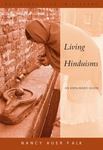
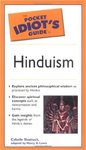
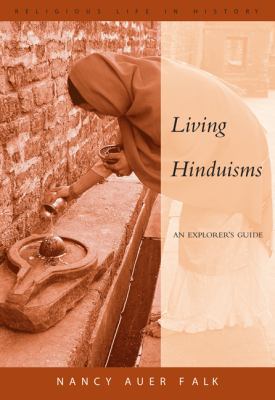
Living Hinduisms: An Explorer's Guide
Nancy Falk
Aiming to turn inside-out models currently used for the teaching of Hinduism, Nancy Falk's new LIVING HINDUISMS aims to introduce students to this religion through an illuminating presentation of its lived practices. Recognizing an all-too-frequent disconnect that students of Hinduism feel when confronted with the actual sights and sounds of contemporary Hindu rituals, Nancy Falk brings these experiences to life through an astute and eye-opening exploration of Hinduism's diverse, yet--as she argues--unified traditions.
-

Comparing Religions
Thomas Athanasius Idinopulos, Brian C. Wilson, and James Constantine Hanges
Comparing Religions covers such important topics as recent theoretical approaches to comparison, case studies of comparing religions in the classroom, and the impact of postcolonialism and postmodernism on the modernist assumptions of comparitivism in the academic study of religion.
-
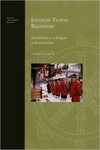
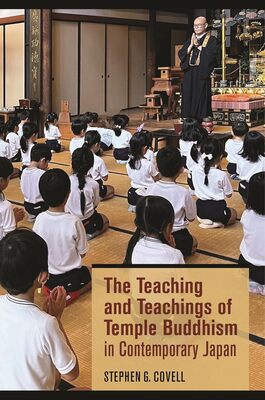
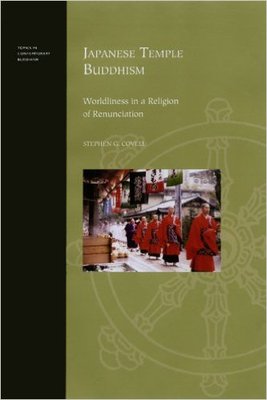
Japanese Temple Buddhism
Stephen G. Covell
There have been many studies that focus on aspects of the history of Japanese Buddhism. Until now, none have addressed important questions of organization and practice in contemporary Buddhism, questions such as how Japanese Buddhism came to be seen as a religion of funeral practices; how Buddhist institutions envision the role of the laity; and how a married clergy has affected life at temples and the image of priests. This volume is the first to address fully contemporary Buddhist life and institutions―topics often overlooked in the conflict between the rhetoric of renunciation and the practices of clerical marriage and householding that characterize much of Buddhism in today’s Japan. Informed by years of field research and his own experiences training to be a Tendai priest, Stephen Covell skillfully refutes this "corruption paradigm" while revealing the many (often contradictory) facets of contemporary institutional Buddhism, or as Covell terms it, Temple Buddhism.
Covell significantly broadens the scope of inquiry to include how Buddhism is approached by both laity and clerics when he takes into account temple families, community involvement, and the commodification of practice. He considers law and tax issues, temple strikes, and the politics of temple boards of directors to shed light on how temples are run and viewed by their inhabitants, supporters, and society in general. In doing so he uncovers the economic realities that shape ritual practices and shows how mundane factors such as taxes influence the debate over temple Buddhism’s role in contemporary Japanese society. In addition, through interviews and analyses of sectarian literature and recent scholarship on gender and Buddhism, he provides a detailed look at priests’ wives, who have become indispensable in the management of temple affairs.
-
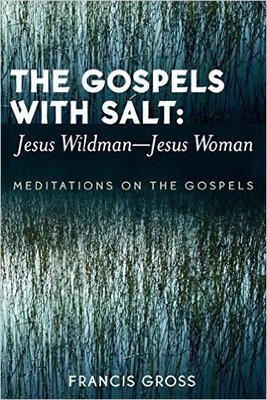
The Gospels with Salt
Francis Gross
This learned, highly personal, and blunt devotional commentary on selected passages in the four gospels is intended for both devotional and educational purposes. It showcases a number of archetypal images of Jesus found in the gospels, including Jesus as Wildman, feminine man, wounded healer, fiery prophet, and Trickster.
-
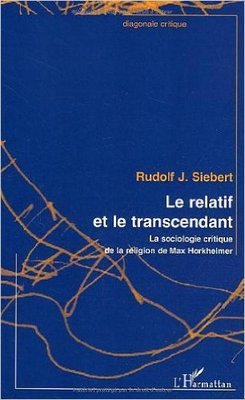
Le Relatif et le Transcendant : La Sociologie Critique de la Religion de Max Horkheimer
Rudolf Siebert
La théorie dialectique de la religion est une dimension fondamentale de la théorie critique de la société que Max Horkheimer a développée à l'Institut de recherche sociale de Francfort de 1931 à 1973. Horkheimer a critiqué mais aussi préservé et complété les travaux de nombre de penseurs européens parmi les plus grands. Il a mis l'accent sur la relation entre le fini et l'infini, le relatif et le transcendant...
-
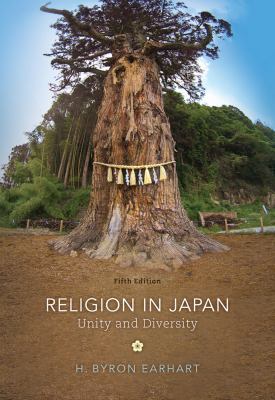
Japanese Religion, Unity and Diversity
H. Byron Earhart
In continuous print since 1969, this text has helped establish the treatment of Japanese religion as a unified worldview, offering a concise yet thorough look at the culture and history of the Japanese religion. This text helps students see Japanese religion as a whole, rather than as disconnected religious traditions. No technical knowledge of Japanese history, Japanese religion, or the Japanese language is required for understanding the material. JAPANESE RELIGION has been used in Japan and Europe, as well as in North America.
-
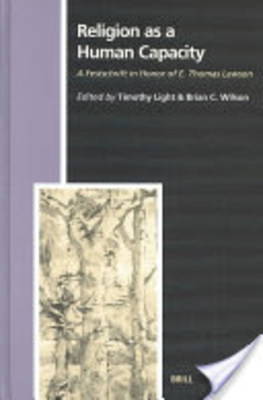
Religion as a human capacity : a festschrift in honor of E. Thomas Lawson
Timothy Light and Brian C. Wilson
Prepared in honor of E. Thomas Lawson, the essays in Religion as a Human Capacity represent diverse points of view in the study of religion today. Part I, Theoretical Studies, offers a broad range of cognitivist theoretical explorations, while Part II, Studies in Religious Behavior, presents cutting-edge applications of cognitive and other contemporary theories to religious data. This volume celebrates Lawson s critical contributions to cognitive studies of religion and the degree to which his ultimate goal of scholarship as a search for truth is matched by those who have been his colleagues and been influenced by him. Religion as a Human Capacity will be of interest to all those concerned with theory and method in the academic study of religion
-
Unspoken Worlds: Women's Religious Lives
Nancy Falk and Rita M. Gross
With thoroughly integrated readings and original introductions, UNSPOKEN WORLDS provides an illustration of cross-cultural patterns in women's religious lives. Carefully selected works writings by eminent scholars have been judiciously edited by Falk and Gross to weave them into a coherent whole that evolves from simple, vivid portraits of individual women to analyses of complete systems.
-
Reappraising Durkheim for the Study and Teaching of Religion Today
Thomas A. Idinopulos and Brian C. Wilson
Reappraising Durkheim for the Study and Teaching of Religion Today" is an occasion to critically analyze and reassess the work of this intellectual pioneer. It is also an effort to signal the continuing importance of Durkheim for today s graduate and advanced undergraduate classrooms. "Reappraising Durkheim" brings together ten new critical essays in which noted sociologists, psychologists, phenomenologists, philosophers, and historians of religion grapple with the questions Durkheim raised and the solutions he proposed. Taken together, the volume is a careful historical and multi-disciplinary study of Durkheim that will lead students to a better understanding of how to study religion. "Reappraising Durkheim" will be an excellent text for courses focusing on theory and method in the academic study of religion at both the graduate and advanced undergraduate level. It would therefore be appropriate for use in departments of religious studies, philosophy, sociology, and anthropology.
-
Shugendo: Essays on the Structure of Japanese Folk Religion
Hitoshi Miyake
Essays on the structure of of Japanese folk religion.
-
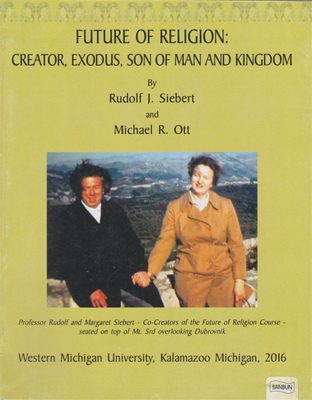
The Critical Theory of Religion: The Frankfurt School
Rudolf J. Siebert
This book treats the critical theory of religion of Max Horkheimer, Walter Benjamin, Theodor W. Adorno, Friedrich Pollock, Erich Fromm, Herbert Marcuse, Alfred Sohn-Rethel, Jyrgen Habermas and other critical theorists who tried to make sense out of the senseless war experience by exploring the writings of Immanuel Kant, Friedrich W.J. Schelling, Georg W.F. Hegel, Artur Schopenhauer, Karl Marx, Friedrich Nietzsche, and Sigmund Freud.
-
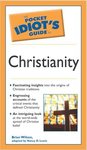
Christianity
Brian Wilson
Christianity is a concise and readable survey of the history of Christianity, from its beginnings in late antiquity, through the Reformations in the West, to its present-day globalization. Focusing particularly on the modern period, it provides a valuable introduction to contemporary christian beliefs and practices, and looks at the ways in which this diverse religion has adapted, and continues to adapt, to the challenges of the modern world.
-
What Is Religion?: Origins, Definitions, and Explanations
Thomas A. Idinopulos and Brian C. Wilson
"What is Religion?" consists of fourteen essays written by a selection of scholars who represent a wide spectrum of approaches to the acedamic study of religion. Each of the essays is an effort not only to take stock of the present controversy concerning appropriate methodologies for the study of religion, but also to take one giant step beyond that to formulate a precise definition of religion. Given the considerable confusion today about what it is exactly that religious studies scholars take to be their subject matter when they presume to professionally teach about religion, this volume provides a much needed forum for leading scholars to debate and clarify what professors of religious studies understand as the central object or objects under their scrunity.
-
Religion in the Japanese Experience
H. Byron Earhart
The authors intention in compiling this anthology is to help the reader see Japanese religion more concretely, as it is found within the history of the tradition and experience of the people. The overall purpose of the selections, which represent various historical periods and schools of thought, is to show what religion means in the Japanese experience.