

The goal is to record most books written or edited by the School of Communication faculty. We will start by entering the most recent publications first and work our way back to older books. There is a WMU Authors section in Waldo Library, where most of these books can be found.
.With a few exceptions, we do not have the rights to put the full text of the book online, so there will be a link to a place where you can purchase the book.
If you are a faculty member and have a book you would like to include in the WMU book list, please contact [email protected]















-
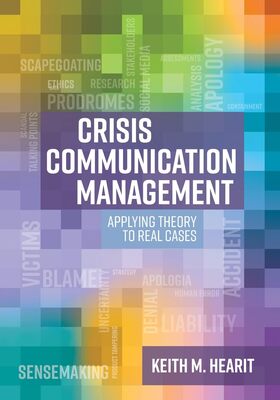
Crisis Communication Management: Applying Theory to Real Cases
Keith Michael Hearit
Crisis Communication Management: Applying Theory to Real Cases combines theoretical insights with practical case studies to provide readers with a comprehensive look at crisis management and communication. The book's foundational premise is that crises, although complex and multifaceted, are a predictable feature of modern organizational life. It explores crises in multiple contexts and examines the stages they typically progress through, emphasizing the critical role of communication at each juncture.
With a structure that guides readers from basics to in-depth knowledge, the book covers essential topics such as the role of organizations as social actors, the dynamics of social movements, the rhetorical resonance of victims, and the legal and ethical implications of crises. It addresses societal perceptions of guilt, the impact of words in crises, typical communication responses organizations may rely on, and offers realistic appraisals of their effectiveness. The text concludes with a discussion of the treatment of day-to-day crisis management, furnishing readers with actionable guidance on communication techniques and how to manage media relations.
Recognizing crises as normal occurrences rather than exceptions, Crisis Communication Management underscores the importance of preparedness and equips students with critical skills for a world where crisis management is increasingly relevant.
-
Media Challenges to Digital Flourishing
Sandra L. Borden
This book engages broadly with the impacts of media practices on our prospects for thriving as moral beings in today's digital spaces. It brings together senior and junior scholars in communication and philosophy originally convened for a symposium on the theme of Media Challenges to Digital Flourishing. Using perspectives ranging from virtue ethics and media sociology to care ethics and moral psychology, the authors anticipate and analyze cutting-edge ethical issues at the nexus of media and technology.
Topics covered include the moral standing of artificial intelligence, the characteristics of virtues and moral exemplars in digital spaces, the prospects for moral autonomy under the terms of surveillance capitalism, and the obligation of media ethicists to proactively flag emerging ethical problems. In short, this book attempts to identify and address the impacts of digital media practices on our prospects for thriving as moral beings in terms of both the virtuous and the virtual.
This interdisciplinary volume is a helpful resource for students and scholars of media, communication, journalism, technology, moral psychology and ethics, as well as practitioners and policy makers with related interests. It was originally published as a special issue of the Journal of Media Ethics.
-
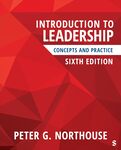
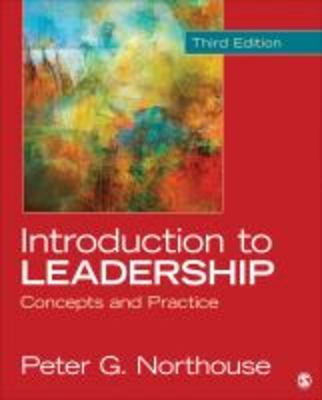
Introduction to Leadership: Concepts and Practice
Peter G. Northouse
New chapter on Working with Groups! The Sixth Edition of Peter G. Northouse′s best-selling Introduction to Leadership: Concepts and Practice provides readers with a clear, concise overview of the complexities of practicing leadership and concrete strategies for becoming better leaders. The text is organized around key leader responsibilities such as creating a vision, engaging strengths, and managing conflict. Case studies, self-assessment questionnaires, observational exercises, and reflection and action worksheets allow readers to apply leadership concepts to their own lives. Grounded in leadership theory and the latest research, the fully updated, highly practical new edition includes a new chapter on working with groups, 2 new cases, and 6 new Leadership Snapshots.
-

Disruption and Dissent in Public Diplomacy
Anna Popkova
This book explores the significant yet understudied role of non-state actors (NSAs) as agents of disruption and dissent in public diplomacy. While existing research mainly focuses on collaborative aspects of state-NSA relations, this book delves into instances where NSAs challenge their states' foreign and domestic policies, directly impacting public diplomacy efforts. From protests challenging the "good" image that the state governments try to project, to activities of governments-in-exile and dissenting diaspora groups, to cities taking actions that defy official state policies - examples of non-state actors engaging in political dissent and disrupting the public diplomacy efforts of their states can be found in virtually any region and political system. Yet the phenomenon of political dissent and its role in public diplomacy remains understudied by public diplomacy scholars. This book seeks to fill this gap.
-
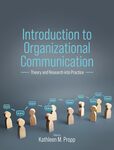
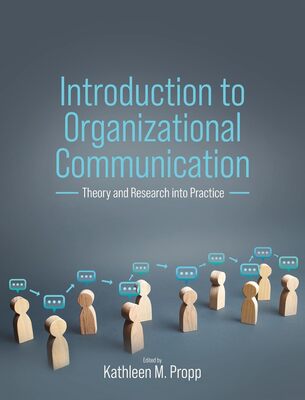
Introduction to Organizational Communication: Theory and Research into Practice
Kathleen M. Propp
Introduction to Organizational Communication: Theory and Research into Practice is designed to explore the various theories, research, and communication practices related to organizing within the context of a workplace. Unit I, Theories and Research of Organizing, delves into the foundational theories of organizational management. It covers classical approaches that emphasize efficient structures for organizing employees, human relations that recognize employees' social needs, human resources that value employees' contributions, cultural approaches that interpret organizational reality, systems theory that acknowledges organizational interdependence and openness, and critical approaches that challenge the status quo within organizations. . Unit II, Communication Practices of Organizing, shifts the focus to practical applications of communication in organizational settings. It addresses topics such as socialization, stress and burnout, conflict management, teamwork, diversity, leadership, and motivation and feedback. Each chapter includes readings from various authors who provide insights and research findings on the respective topics. . Providing students with a comprehensive understanding of organizational behavior with emphasis on communication as a central element of effective management and organizational success, the text is an ideal resource for courses and programs in organizational behavior and communication.
-
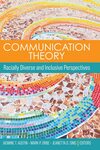
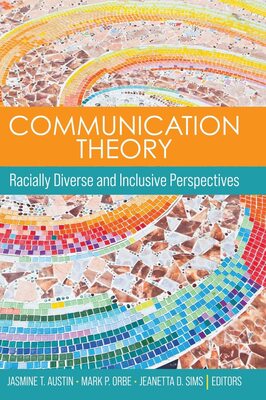
Communication Theory: Racially Diverse and Inclusive Perspectives
Mark Orbe
Featuring contributed chapters from established and emerging communication theorists with varied cultural backgrounds and identities, Communication Theory: Racially Diverse and Inclusive Perspectives decenters traditional views of communication by highlighting perspectives from the global majority. The text deviates from a white-colonial-normative theoretical core to provide students with a more holistic exploration of communication theory. The book helps readers understand how the communicative experiences of marginalized groups represent important theoretical frames necessary for a full, comprehensive view of communication. It offers innovative conceptions of communication theorizing centered in and through the perspectives of African American/Black, Latinx, Asian American, and Indigenous/First Nations people. Through the presentation of canonized theories alongside innovative, cutting-edge theories, the text challenges students to expand and enhance the ways in which they see, use, and apply communication theory. A unique feature of the text is the inclusion of storied reflections-personal narratives that reveal scholars at various stages of their careers ruminating on their own experiences with theory. These reflections demonstrate how ethnic and racialized standpoints can inform and advance scholarship within the discipline. Communication Theory presents an inclusive, holistic approach to communication theory and inspires continued exploration, research, and theory in the discipline. It can serve as a primary textbook as well as a companion volume to other textbooks on communication theory. Chapters and contributors include: Chapter 1 - Undocumented Critical Theory - Carlos Aguilar and Daniela Juarez Chapter 2 - Black Feminist Thought - Marnel Niles Goins and Jasmine T. Austin Chapter 3 - Cultural Contracts Theory - Ronald L. Jackson II and Gina Castle Bell Chapter 4 - Conflict Face-Negotiation Theory in Intercultural-Interpersonal Contexts - Stella Ting-Toomey Chapter 5 - Co-cultural Theory - Mark P. Orbe and Fatima Albrehi Chapter 6 - Ethnic Communication Theory - Uchenna Onuzulike Chapter 7 - Social Network Theory - Wenlin Liu Chapter 8 - Ethnic-Racial Socialization and Communication - Mackensie Minniear Chapter 9 - Strong Black Woman Collective Theory - Sharde M. Davis and Martinique K. Jones Chapter 10 - Theory of Differential Adaptation - Antonio Tomas De La. Garza Chapter 11 - Four-Faceted Model of Accelerating Leader Identity - Jeanetta D. Sims and Ed Cunliff Chapter 12 - Culture-Centered Approach to Communicating Health - Mohan J. Dutta Chapter 13 - Bilingual Health Communication (BHC) Model - Elaine Hsieh Chapter 14 - Complicity Theory - Mark Lawrence McPhail Chapter 15 - Womanist Rhetorical Theory - Dianna N. Watkins-Dickerson Chapter 16 - Positive Deviance Approach - Arvind Singhal Chapter 17 - Stuart Hall and Cultural Studies - Isabel Molina-Guzman Chapter 18 - (Counter)Public Sphere Theory - Catherine R. Squires and Mark P. Orbe Chapter 19 - Critical Media Effects - Srividya "Srivi" Ramasubramanian Chapter 20 - Theory of Hyper(in)Visibility - Amber Johnson and Jade Petermon Storied reflections include: Living for This Stuff! - Mark P. Orbe "Humph, but not for long!" - Jasmine T. Austin Fascinations, Frameworks, and Knowledge Pauses - Jeanette D. Sims Does It Really Work Like That? - Britney N. Gilmore Black Masculinities Theory - Mark C. Hopson It Hasn''t Been What I Imagined - Ashlee Lambert An Upward Journey and Sunwise Path - Dalaki Livingston Communication Modalities-Behavior in Search of Theory - Dorothy L. Pennington A Practitioner''s Journey with Theory-Using Theories for Skill Building on the Frontlines of Organizations - Pavitra Kavya "I''m Blackity Black, and I''m Black Y''all!" - Ajia Meux The Magic of Mentors and Theory - Kristina Ruiz-Mesa Making Ourselves Visible - Nickesia S. Gordon Representation in Coming - Tianna L. Cobb The Push and Pull of Connection Making - Scott E. Branton Grappling with My Zonas Erroneas as a Double Outsider - Wilfredo Alvarez Connecting and Disconnecting through Proyectos e Investigaciones - Virginia Sanchez Hovering about Prevailing Theories - Alberto Gonzalez Returning Home - B. Liahnna Stanley Searching for Stuart Hall - Catherine R. Squires The (Mis)Education of Race - David Stamps Theory as Liberation - Elizabeth M. Lozano
-
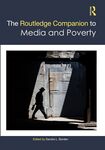
The Routledge Companion to Media and Poverty
Sandra Borden
Comprehensive and interdisciplinary, this collection explores the complex, and often problematic, ways in which the news media shapes perceptions of poverty. Editor Sandra L. Borden and a diverse collection of scholars and journalists question exactly how the news media can reinforce (or undermine) poverty and privilege. This book is divided into five parts that examine philosophical principles for reporting on poverty, the history and nature of poverty coverage, problematic representations of people experiencing poverty, poverty coverage as part of reporting on public policy and positive possibilities for poverty coverage. Each section provides an introduction to the topic, as well as a broad selection of essays illuminating key issues and a Q&A with a relevant journalist. Topics covered include news coverage of corporate philanthropy, structural bias in reporting, representations of the working poor, the moral demands of vulnerability and agency, community empowerment and citizen media. The book's broad focus considers media and poverty at both the local and global levels with contributors from 16 countries. This is an ideal reference for students and scholars of media, communication and journalism who are studying topics involving the media and social justice, as well as journalists, activists and policy makers working in these areas.
-
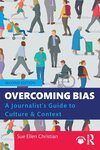
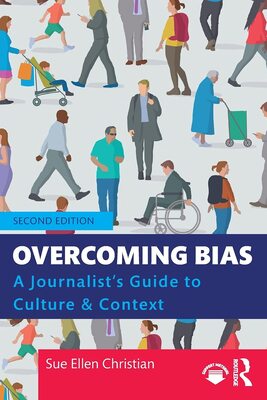
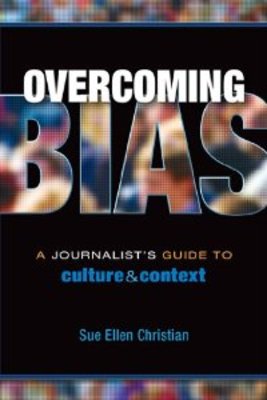
Overcoming Bias: A Journalist's Guide to Culture & Context
Sue Ellen Christian
In this practical and engaging new edition, experienced reporter and teacher Sue Ellen Christian offers a fully updated and fresh take on reporting without bias, examining the way that we categorize people, filter information and default to rehearsed ways of thinking. This book is about biases that affect journalism at every stage of reporting and writing. Included throughout are stories and advice from working reporters and editors, providing real-world voices and experiences, and covering questions of culture, stereotyping, sources, writing, editing, visuals and reflective practice. This advice and guidance is coupled with practical exercises that give readers the chance to apply what they learn. Christian provides a career-long foundation for those looking to edit their thinking and to champion a more inclusive and open-minded approach to coverage of our multicultural society. Offering a concise, readable and highly applicable guide to managing coverage of contemporary social issues, this book is an ideal resource for undergraduate and graduate students of journalism and early career journalists.
-
Leader-Member Exchange and Organizational Communication: Facilitating a Healthy Work Environment
Leah Omilion-Hodges and Jennifer K. Ptacek
It is hard to overstate the importance of the leader-member exchange relationship. Employees who share a high-quality relationship with their leader are more likely to earn a higher salary, climb the ranks more quickly, and report higher life satisfaction levels than their peers who have a less copasetic leader-member relationship. While Leader-Member Exchange Theory (LMX) research addresses the impact that the leader-member relationship has on the individual employee experience, much of this scholarship overlooks or obscures the vital role that communication plays in the development and maintenance of workgroup relationships. Much of extant literature also glosses over the role that communication plays in workgroup collaboration. Using a communicative lens, this text illustrates the complex theoretical underpinnings of LMX theory, such as the importance of social interaction and relationship building and maintenance necessary to achieve organizational goals. We explore how an employee's relationship with their leader also shapes their peer relationships and their overall standing within their workgroup. Further, the text examines the potential dark side of LMX theory, such as the tendency towards demographic and trait and state similarity. Employing a communicative perspective emphasizes the extent of position and personal power both leaders and members have in engineering the quality of the relationship they desire. Integrating and applying once disparate lines of academic literature, this book offers employees, students, and teacher-scholars pragmatic yet research-based insights into developing and maintaining successful, healthy workplace relationships.
-
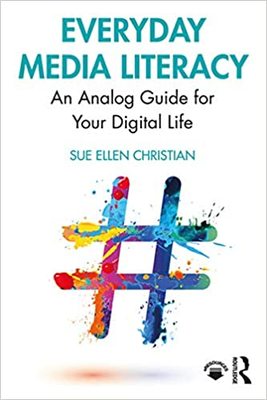
Everyday Media Literacy : An Analog Guide for Your Digital Life
Sue Ellen Christian
In this graphic guide to media literacy, award-winning educator Sue Ellen Christian offers students an accessible, informed and lively look at how they can consume and create media intentionally and critically. The straight-talking textbook offers timely examples and relevant activities to equip students with the skills and knowledge they need to assess all media, including news and information. Through discussion prompts, writing exercises, key terms, online links and even origami, readers are provided with a framework from which to critically consume and create media in their everyday lives. Chapters examine news literacy, online activism, digital inequality, privacy, social media and identity, global media corporations and beyond, giving readers a nuanced understanding of the key concepts and concerns at the core of media literacy. Concise, creative and curated, this book highlights the cultural, political and economic dynamics of media in our contemporary society, and how consumers can mindfully navigate their daily media use. Everyday Media Literacy is perfect for students (and educators) of media literacy, journalism, education and media effects looking to build their understanding in an engaging way. Instructor slides and quizzes (with answers in bold) for this book are available through the Routledge Instructor Hub.
-
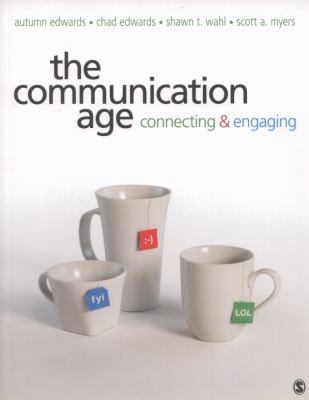
The Communication Age: Connecting and Engaging
Autumn P. Edwards, Chad Edwards, Shawn T. Wahl, and Scott A. Meyers
When should you send a text message, and when is it more appropriate to talk face-to-face? What is the best way to prepare for a job interview that will be conducted over video? How should you modify your speech if it will be recorded and posted online? The Communication Age: Connecting and Engaging by Autumn Edwards, Chad Edwards, Shawn T. Wahl, and Scott A. Myers introduces students to the foundational concepts and essential skills of effective communication, with a strong emphasis on the impact of technology in our increasingly interconnected world. This new Third Edition helps students become involved in our diverse global community and learn how to apply key principles of effective communication--whether incorporating media, technology, or traditional face-to-face speech communication--to foster civic engagement for a better future. With comprehensive coverage of the essentials of interpersonal, small group, and public communication, this text is ideal for use in hybrid introduction to communication courses.
-
Media, Telecommunications, and Business Strategy
Richard Gershon
As the clear lines and historic boundaries that once separated broadcasting, cable, telephone and Internet communication dissolve, this comprehensive new edition examines the relationship and convergence patterns between industries by exploring the effects of digitalization in media and information technology. With today's dynamic and rapidly evolving communication environment, media managers need to have a clear understanding of the different delivery platforms as well as critical management and planning strategies going forward. Advancements in new media and communication technology coupled with a rapidly changing global economy promise a new set of hybrid-media companies that will allow for the full integration of information and entertainment services and give new meaning to the term programming . This book provides a detailed look at seven key sectors of the media and telecommunications field as well as ongoing changes within the industry. The new edition includes updated research throughout including material on major business and technology changes as well as the importance of digital lifestyle reflected in E-commerce and developments in Over-the-Top Video streaming services. Special attention is given to such areas as strategic planning, innovation, marketing, finance and leadership. Perfect for courses in media management and media industries, as well as professional managers, this book serves as an important reference guide during this transitional time.
-
Interpersonal Communication: Principles and Practice
Annette Hamel
Interpersonal Communication: Principles and Practice focuses on the principles of Interpersonal Communication, while placing special emphasis on everyday life applications. It equips students with a set of practical tools that will boost their successes in personal and workplace relationships.
-

Leadership Case Studies in Education
Peter Guy Northouse
"This is a must-have book for educational leadership." -Joseph Mukuni, Virginia Tech University Engaging, practical, and relevant, Leadership Case Studies in Education, Second Edition applies leadership theories in educational settings. Designed to be used alongside Leadership: Theory and Practice, Eighth Edition, this casebook provides relevant, substantive, and contemporary case studies on leadership issues in Higher Education and K-12 Education. Each of the 32 case studies include critical thinking questions that encourage students to apply leadership theory and concepts to real-life situations. Fully updated with new citations, statistics, and a new chapter on followership, Leadership Case Studies in Education is the perfect companion for educational leadership courses.
-
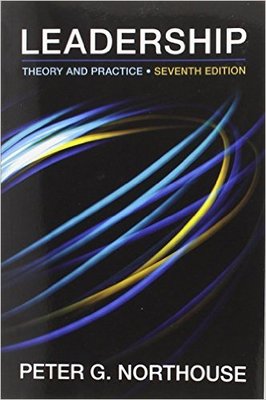
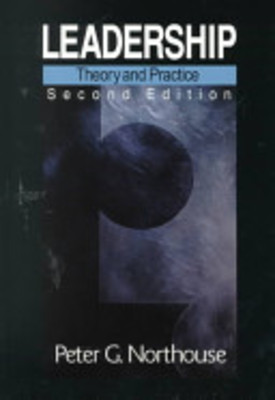
Leadership: Theory and Practice
Peter Guy Northouse
Now with an all-new chapter on Followership! Adopted at more than 1600 institutions in 89 countries and translated into 13 different languages, this market-leading text successfully combines an academically robust account of the major theories and models of leadership with an accessible style and special emphasis on how leadership theory can inform leadership practice. Peter G. Northouse uses a consistent structure for each chapter, allowing students to easily compare and contrast the various theories. Case studies and questionnaires provide students with practical examples and opportunities to deepen their personal understanding of their own leadership style. Leadership: Theory and Practice, Eighth Edition provides readers with a user-friendly account of a wide range of leadership research in a clear, concise, and interesting manner.
-
The Communication Age: Connecting and Engaging
Autumn P. Edwards, Chad Edwards, Shawn T. Wahl, and Scott A. Myers
We are in “the communication age.” No matter who you are or how you communicate, we are all members of a society who connect through the internet, not just to it. From face-to-face interactions to all forms of social media, The Communication Age, Second Edition invites you to join the conversation about today’s issues and make your voice heard. This contemporary and engaging text introduces students to the essentials of interpersonal, small group, and public communication while incorporating technology, media, and speech communication to foster civic engagement for a better future.
-
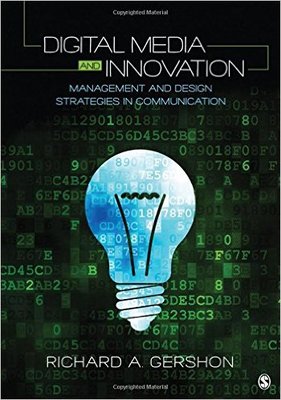
Digital Media and Innovation: Management and Design Strategies in Communication
Richard A. Gershon
Digital Media and Innovation, by Richard A. Gershon, takes an in-depth look at how smart, creative companies have transformed the business of media and telecommunications by introducing unique and original products and services. Today's media managers are faced with the same basic question: what are the best methods for staying competitive over time? In one word: innovation. From electronic commerce (Amazon, Google) to music and video streaming (Apple, Pandora, and Netflix), digital media has transformed the business of retail selling and personal lifestyle. This text will introduce current and future media industry professionals to the people, companies, and strategies that have proven to be real game changers by offering the marketplace a unique value proposition for the consumer.
-
Leadership Case Studies in Education
Peter Guy Northouse and Marie Lee
Leadership Case Studies in Education looks at leadership through the eyes of educators. The text examines how the major theories and models of leadership apply to education. Taking a clear, concise, and informative approach, Peter G. Northouse, Marie Lee, and contributors from all levels of the education discipline provide readers with real-world case studies that illustrate the complex leadership challenges and issues facing educators today. Engaging, practical, and relevant, Leadership Case Studies in Education is the perfect companion for educational leadership courses.
-
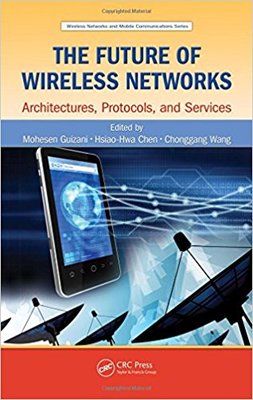
The Future of Wireless Networks
Mohesen Guizani, Hsiao-Hwa Chen, and Chonggang Wang
The exponential increase in mobile device users and high-bandwidth applications has pushed the current 3G and 4G wireless networks to their capacity. Moreover, it is predicted that mobile data traffic will continue to grow by over 300 percent by 2017. To handle this spectacular growth, the development of improved wireless networks for the future has been of paramount importance. The Future of Wireless Networks: Architectures, Protocols, and Services discusses the future of wireless networks, including the emerging network architectures, underlying protocols, services, and applications.
The first part of the book focuses on new wireless network architectures that are being developed, such as mobile SDN, wireless local area networks (i.e., 802.11), and wireless sensor networks for the Smart Grid. In the second part of the book, the authors discuss the new protocols and enabling technologies for the different wireless network architectures. These include wireless MAC protocols, resource allocation in cognitive radio networks, multicast transmission, and femtocells, which provide enhanced indoor coverage and increased network capacity.
The book’s final section discusses several new services and applications that are springing up, such as multisource selection for wireless peer-to-peer (P2P) networks and device-to-device (D2D) content sharing, which reduces duplicated downloads of the same contents on cellular links by offloading the traffic onto other networks. This section also covers the next generation of wireless security and privacy control techniques that service providers can use to ensure that their infrastructures and services are adequately protected against all kinds of threats.
-
Leadership: Theory and Practice
Peter Guy Northouse
Translated into 12 different languages and used in 89 countries, this market-leading text successfully combines an academically robust account of the major theories and models of leadership with an accessible style and practical examples that help students apply what they learn. Peter G. Northouse uses a consistent format for each chapter, allowing students to compare the various theories. Each chapter includes three case studies that provide students with practical examples of the theories discussed. Adopted at more than 1,000 colleges, universities, and institutions worldwide, Leadership: Theory and Practice provides readers with a user-friendly account of a wide range of leadership research in a clear, concise, and interesting manner.
-
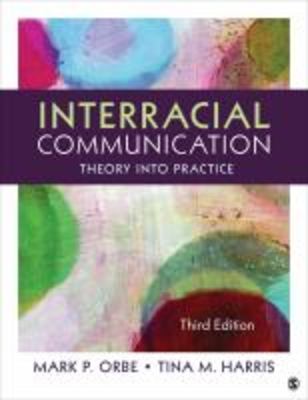
Interracial Communication: Theory into Practice
Mark P. Orbe and Tina M. Harris
Interracial Communication: Theory Into Practice, Third Edition, by Mark P. Orbe and Tina M. Harris, guides readers in applying the contributions of recent communication theory to improving everyday communication among the races. The authors offer a comprehensive, practical foundation for dialogue on interracial communication, as well as a resource that stimulates thinking and encourages readers to become active participants in dialogue across racial barriers. Part I provides a foundation for studying interracial communication and includes chapters on the history of race and racial categories, the importance of language, the development of racial and cultural identities, and current and classical theoretical approaches. Part II applies this information to interracial communication practices in specific, everyday contexts, including friendships, romantic relationships, the mass media, and organizational, public, and group settings. This Third Edition includes the latest data, new research studies and examples, all-new photos, and important new topics.
-
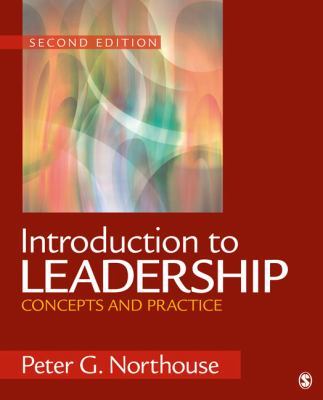
Introduction to Leadership: Concepts and Practice
Peter Guy Northouse
Providing practical strategies for becoming a better leader, this bestselling book includes interactive elements to help students apply leadership concepts to their own lives. The book examines one quality of leadership per chapter, enabling students to apply concepts and skills to their leadership development. It provides self-assessment questionnaires, observational exercises, and reflection and action worksheets in each chapter. A new chapter on handling conflict has been added to the Second Edition, giving a multi-faceted view of conflict and methods for resolving conflict in leadership situations. Case studies have been added to the end of each chapter, including more global examples, and followed by questions to stimulate class discussion.
-
The Communication Age : Connecting and Engaging
Autumn Edwards, Chad Edwards, Shawn T. Wahl, and Scott A. Meyers
We are in the communication age. No matter who you are or how you communicate-from baby boomers to millennials, born digital or getting there-we are all members of a society who connect through the internet, not just to it. From face-to-face to Facebook, this book invites you to join the conversation about today’s issues and have your voice heard.
This contemporary and engaging text is built from the ground up to bridge the gap and unite our diverse community. It shows students how to apply foundational concepts while incorporating technology, media, and speech communication to foster civic engagement for a better future. We are communication.
-
Communication in Health Organizations
Julie Apker
Communication in Health Organizations explores the communication processes, issues, and concepts that comprise the organization of health care, focusing on the interactions that influence the lives of patients, health professionals, and other members of health institutions. This book integrates scholarship from communication, medicine, nursing, public health, and allied health, to provide a comprehensive review of the research literature. The author explains the complexities and contingencies of communication in health settings using systems theory, an approach that enhances reader understanding of health organizing. The reader will gain greater familiarity with how health institutions function communicatively, and why the people who work in health professions interact as they do. The text provides multiple opportunities to analyze communication occurring in health organizations and to apply communication skills to personal experiences. This knowledge may improve communication between patients, employees, or consumers. Understanding and applying the concepts discussed in this book can enhance communication in health organizations, which ultimately benefits health care delivery. Communication in Health Organizations offers students, researchers, and health practitioners a unique multi-disciplinary perspective that invites stimulating reflection, discussion, and application of communication issues affecting today′s health system.
-
Overcoming Bias : A Journalist's Guide to Culture & Context
Sue Ellen Christian
Journalists go out of their way to avoid purposeful bias in the news. But there is a more pervasive set of internal biases and flaws in thinking that can lead to unintentional inaccuracies and distortions in news coverage. This engaging book offers a fresh take on reporting without bias, targeting the way that we categorize people, filter information and default to rehearsed ways of thinking.
Included throughout are stories and on-target advice from reporters and editors, providing real-world voices and experiences. This advice and guidance is coupled with practical exercises that give readers the chance to apply what they learn.
Overcoming Bias will teach readers to edit their thinking for habitual errors, making them more perceptive journalists. It provides a career-long foundation for challenging bias.
This is an ideal text for a course on multi-cultural reporting or journalism ethics; it may also be used as a supplement in any course on reporting and writing, as each chapter deals with potential biases that emerge at each stage of the story process, from story ideas to editing.
From Amazon